Why Site Preparation Is Critical in Cape Town Construction
Classification
Commercial Maintenance
Timestamp
March 2026
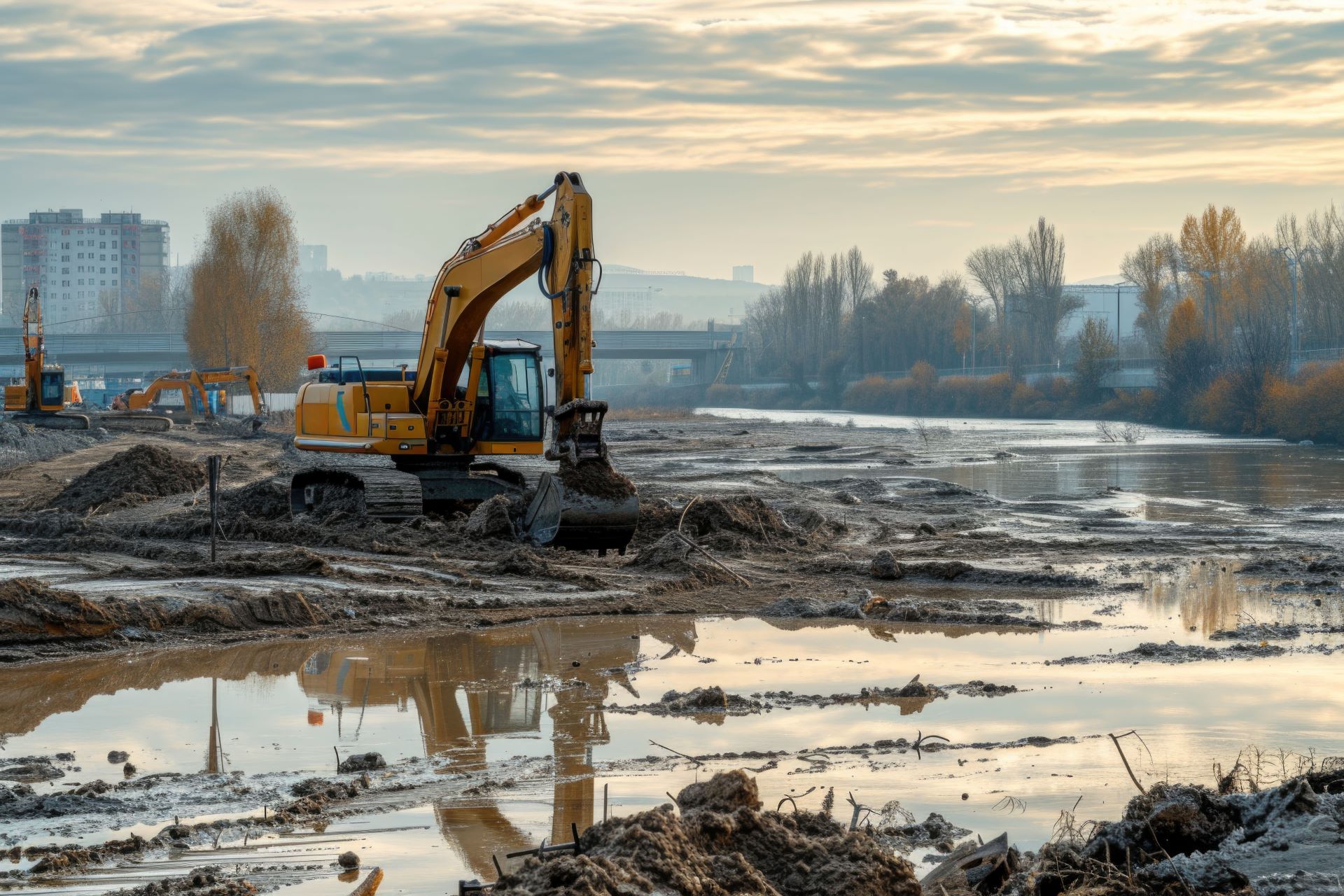
Introduction: The Hidden First Step of Construction
When people picture construction, they often imagine cranes swinging steel beams, bricklayers stacking walls, or concrete trucks pouring foundations into prepared trenches. Yet long before any of these visible activities take place, an essential phase quietly determines whether the project will succeed or struggle. This phase is site preparation.
Site preparation is the unseen groundwork that determines how a building interacts with the land beneath it. In Cape Town, where landscapes range from sandy coastal flats to steep mountain slopes and clay-heavy inland soils, preparing a construction site properly is not merely a technical formality. It is the difference between a stable structure and one that may suffer cracking, settlement, or drainage problems years later.
Construction professionals understand that buildings do not exist independently of the ground beneath them. The soil carries every kilogram of weight, every load from wind, every vibration from movement inside the structure. If that soil is unstable or poorly prepared, even the strongest building materials cannot compensate for the underlying weakness.
The process of site preparation involves multiple steps that occur before foundations are even considered. These include soil testing, land surveying, clearing vegetation, reshaping terrain through grading, managing drainage, and stabilising the ground. Each step builds on the last to create a safe, reliable base for construction.
In a city like Cape Town, where environmental conditions can shift dramatically across short distances, this early groundwork becomes particularly important. Coastal sands behave differently from inland clay. Mountain slopes require different engineering solutions than flat suburbs. Seasonal rains and strong winds also influence how the land should be prepared before building begins.
Understanding why site preparation matters helps property owners, developers, and even ordinary homeowners appreciate the complexity behind successful construction. It reveals that the most important work on a building project often happens long before the first brick is laid.
Cape Town’s Unique Construction Landscape
Cape Town is one of South Africa’s most visually striking cities, but its beauty presents unique challenges for construction. The dramatic meeting of mountain, sea, and sprawling suburbs creates an incredibly varied geological landscape.
Developers working in the city encounter several different soil types, often within relatively small distances. Coastal areas such as Bloubergstrand, Table View, and Muizenberg are dominated by sandy soils that shift easily under pressure. Inland areas like Durbanville and parts of the Cape Flats may contain clay-rich soils that expand and contract depending on moisture levels.
Mountain-adjacent neighbourhoods introduce another complexity. Areas such as Camps Bay, Constantia, and Hout Bay frequently require construction on sloping terrain where the stability of the ground must be carefully managed. Without proper preparation, gravity and water movement can gradually undermine structures built on steep sites.
Climate also plays a role in how construction sites must be prepared. Cape Town experiences a Mediterranean climate with wet winters and dry summers. Winter rainfall can saturate soils, creating conditions where poorly prepared ground may erode or shift. In summer, dry conditions can cause clay soils to shrink and crack.
Because of these factors, construction professionals in Cape Town rely heavily on thorough site preparation processes. Engineers and geotechnical specialists must understand not only the soil beneath a proposed building but also how that soil behaves across seasons and under changing environmental conditions.
Ignoring these local characteristics can result in costly problems later. Cracked foundations, uneven floors, water intrusion, and structural instability often trace back to insufficient preparation of the construction site. In many cases, the problems could have been prevented through proper testing and grading before building began.
What Site Preparation Actually Involves
To the untrained eye, site preparation might appear to be little more than clearing land and flattening the surface. In reality, it is a structured engineering process designed to transform raw land into a reliable building platform.
The process typically begins with land assessment. Surveyors map the terrain to determine slopes, elevation changes, and property boundaries. Engineers then analyse the site’s geological characteristics, identifying soil types, rock layers, and groundwater conditions.
Once the initial assessment is complete, contractors begin clearing the site. This step involves removing vegetation, debris, old foundations, or other obstacles that could interfere with construction. Tree roots, buried materials, and organic soil layers must often be removed because they can decompose over time, creating voids beneath the building.
After clearing, the focus shifts to shaping the land through grading. Grading adjusts the surface level of the site to ensure proper drainage and structural stability. Earthmoving equipment redistributes soil, creating slopes that guide rainwater away from future buildings while forming a stable platform for foundations.
Compaction follows grading. Soil that has been moved or loosened during earthworks must be compacted to increase its density and load-bearing capacity. Heavy machinery compresses the soil in layers, reducing air pockets and preventing future settlement.
Finally, engineers verify that the prepared ground meets structural requirements. Only after these checks are completed does the site become ready for foundation work.
Each step depends on accurate knowledge of the soil beneath the surface, which is why soil testing plays such a central role in site preparation.
Understanding Soil Testing
Soil testing, often referred to as geotechnical investigation, is one of the most critical stages in the site preparation process. It provides the scientific information engineers need to design foundations that can safely support a building.
The purpose of soil testing is to determine several key characteristics of the ground beneath a proposed structure. Engineers need to understand how much weight the soil can support, how it reacts to moisture changes, and how stable it remains under pressure.
In Cape Town, soil conditions can vary widely, even within a single neighbourhood. A construction site near the coast may consist of loose sand, while a nearby inland plot might contain clay or weathered rock. Without proper testing, builders would be forced to rely on guesswork when designing foundations.
Geotechnical engineers typically conduct soil tests by drilling boreholes into the ground. These boreholes allow them to extract soil samples from different depths. The samples are then analysed in laboratories to determine properties such as density, moisture content, and strength.
Field tests may also be performed directly on site. These tests measure how the soil behaves under load, helping engineers understand how the ground will respond when a building’s weight is applied.
The results of these investigations guide many aspects of construction planning. Engineers use the data to determine the appropriate type of foundation, the depth at which it should be built, and whether the soil requires additional stabilisation before construction proceeds.
Without this information, even experienced builders would face significant risks when starting a project.
Common Soil Challenges in Cape Town
The soils found across Cape Town present several specific challenges that make testing particularly important.
Coastal sands are one of the most common issues in areas close to the ocean. These sands are often loose and highly permeable, meaning water can move through them easily. While this can reduce waterlogging, it also means the soil may shift or compact unevenly under heavy loads.
Clay-rich soils pose a different type of challenge. Clay expands when it absorbs moisture and shrinks when it dries. In regions that experience seasonal rainfall changes, this movement can place stress on building foundations.
Some parts of Cape Town also contain residual soils formed from the weathering of granite and sandstone. These soils can vary significantly in strength depending on their composition and degree of weathering.
Slope stability is another concern in mountainous areas. Building on slopes requires careful analysis to ensure the soil will not gradually move downhill over time. Engineers may need to design retaining structures or reinforcement systems to stabilise the terrain.
Each of these conditions requires different preparation strategies. Soil testing ensures that engineers understand exactly which challenges exist at a given site before construction begins.
The Role of Grading in Construction Stability
Once soil conditions are understood, grading becomes one of the most important physical steps in site preparation. Grading refers to reshaping the land to create a stable surface and manage water flow around the future building.
In Cape Town, grading is particularly important because rainfall patterns can produce sudden bursts of water during winter storms. If a site is not properly graded, rainwater can accumulate around foundations, weakening the soil and increasing the risk of structural damage.
Grading typically involves cutting and filling sections of land to create a controlled slope. The goal is to direct water away from buildings and towards designated drainage points. Even slight changes in elevation can dramatically improve how water moves across a site.
Proper grading also helps prevent erosion. When rainwater flows unchecked across exposed soil, it can wash away fine particles and gradually destabilise the ground beneath a building. By shaping the terrain carefully, engineers can slow water movement and protect the soil structure.
On sloping properties, grading must be handled with particular care. Excessive cutting into a slope can weaken the hillside, while poorly designed fill areas may settle over time. Engineers therefore plan grading operations carefully to maintain balance between excavation and support.
The finished grade establishes the final ground level surrounding the building and sets the stage for foundation construction.
Drainage Planning and Water Management
Water is one of the most powerful forces affecting building stability. Even strong materials like concrete and steel depend on stable soil conditions to perform properly. When water accumulates around a foundation, it can weaken soil strength and cause gradual movement.
In Cape Town’s winter rainfall climate, drainage planning is therefore a critical component of site preparation.
Effective drainage begins with grading, but it often extends beyond simple land shaping. Engineers may design systems that guide water safely away from the construction area.
These solutions may include shallow channels, underground drainage pipes, and permeable surfaces that allow water to disperse gradually into the soil. The goal is to ensure that rainwater never remains trapped around the base of a building.
Poor drainage can lead to a range of structural issues. Saturated soils lose strength and may compress under load, causing foundations to settle unevenly. Water pressure can also build up against retaining walls or basement structures, leading to cracking or leakage.
By addressing drainage during site preparation, builders significantly reduce the likelihood of these problems developing later.
Soil Compaction and Ground Stabilisation
After grading and drainage planning, soil compaction ensures that the ground beneath a building is strong enough to support its weight.
Natural soil often contains air pockets and loose particles. When construction equipment moves across the site or when the weight of a building is applied, these particles can shift and settle. This settlement may occur unevenly, causing structural stress.
Compaction increases soil density by pressing the particles closer together. Heavy rollers and mechanical compactors apply controlled pressure in layers, gradually building a stable base.
In some cases, additional stabilisation methods may be required. Engineers might mix cement or lime into weak soils to increase their strength. Geotextile fabrics can also be used to reinforce soil layers and prevent shifting.
These techniques are particularly useful in areas with sandy or variable soil conditions, which are common in parts of Cape Town.
Proper compaction is carefully monitored through testing. Engineers measure soil density at different depths to confirm that the ground meets required standards before foundation work begins.
Why Skipping Site Preparation Is Risky
When construction projects face tight deadlines or budget constraints, there can be temptation to shorten the site preparation phase. However, skipping or rushing this process often leads to far greater costs later.
Structural repairs caused by foundation movement can be extremely expensive. Cracks in walls, uneven floors, and drainage failures may require extensive intervention once a building is complete.
These issues can also affect property value and occupant safety. Buildings that experience structural movement may develop long-term maintenance problems that persist for decades.
In contrast, thorough site preparation addresses potential problems before construction begins. Identifying weak soils, improving drainage, and stabilising the ground ensures that the building starts with the strongest possible foundation.
For property developers and homeowners alike, this early investment in preparation often prevents far larger expenses in the future.
The Foundation of Successful Construction
Although site preparation receives far less attention than visible construction activities, it forms the foundation of every successful building project.
In a geographically complex city like Cape Town, understanding the land is just as important as designing the structure itself. Soil testing reveals how the ground behaves beneath the surface, while grading and drainage ensure that environmental conditions do not undermine the building over time.
These steps transform raw land into a stable platform capable of supporting homes, offices, and infrastructure for decades.
Construction may capture public attention once cranes appear on the skyline, but the true beginning of every building occurs much earlier. It starts with careful preparation of the land, guided by engineering knowledge and respect for the natural characteristics of the site.
When this process is done correctly, everything that follows becomes more reliable. Foundations remain stable, structures resist environmental stress, and buildings stand strong long into the future.