Soil Moisture and Foundation Stability in Cape Town
Classification
Residential Construction
Timestamp
May 2026
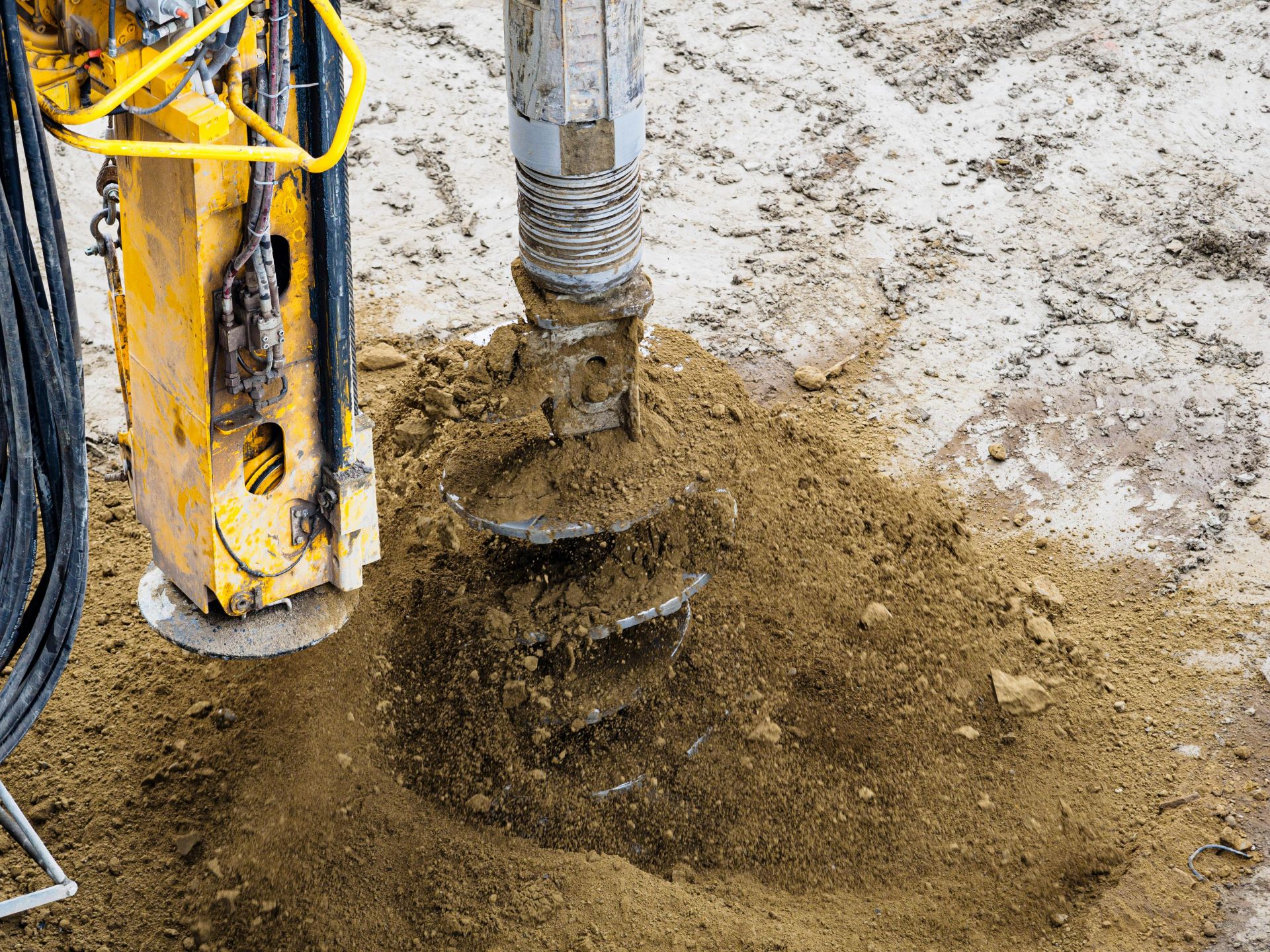
When the Ground Starts to Think for Itself
In Cape Town construction, the ground beneath a building is never just “support.” It behaves more like a slow, responsive system shaped by moisture, climate, and time. Soil that looks solid in summer can soften after winter rain, then contract again during dry spells, subtly shifting everything built above it.
This relationship between soil moisture and foundation stability is one of the most overlooked forces in residential and commercial building performance. Yet it is also one of the most destructive when ignored. Cracks, uneven floors, and structural distortion rarely begin in the walls. They begin in the soil.
Understanding how moisture changes the behaviour of ground conditions is essential for construction and building maintenance across Cape Town’s diverse soil profiles, especially where clay-rich or mixed soils dominate.
The Cape Town Soil Reality: A Patchwork Beneath Our Feet
Cape Town is geotechnically diverse. From sandy coastal belts to clay-influenced inland pockets and weathered shale zones, foundation behaviour can vary significantly within just a few kilometres.
Sandy soils, common in many coastal areas, drain quickly and tend to remain relatively stable. But they can lose support if poorly compacted or eroded by water movement. Clay-bearing soils, on the other hand, are highly reactive. They absorb water and expand, then shrink as they dry.
This makes the region particularly sensitive to seasonal moisture variation. Winter rainfall saturates the soil profile, while dry summers extract moisture from both the surface and deeper layers. That cycle creates continuous expansion and contraction beneath foundations.
Even engineered fills and disturbed soils in urban developments can behave unpredictably if moisture movement is not properly controlled.
Moisture as the Hidden Structural Force
Moisture is not just water in the soil. It is the controlling variable behind almost every foundation movement issue.
When soil moisture increases, fine-grained soils such as clay swell. The particles absorb water, increasing in volume and exerting upward pressure. When moisture decreases, the same soils contract, leaving voids and reducing support beneath foundations.
This dual behaviour creates a constant push-pull effect under buildings. The structure itself may remain rigid, but the ground beneath it is constantly changing shape.
In Cape Town conditions, moisture sources include:
- Seasonal rainfall and stormwater runoff
- Leaking underground plumbing systems
- Poorly directed roof drainage
- Irrigation systems in landscaped gardens
- Natural groundwater fluctuations
Each of these contributes differently, but the result is the same: uneven moisture distribution around and beneath the foundation footprint.
Expansion: When Soil Pushes Back
Expansion occurs when moisture enters the soil matrix, particularly in clay-rich environments. The soil increases in volume and begins exerting upward pressure on any structure above it.
In residential construction, this can lead to slab heave, where sections of a concrete slab lift slightly. It can also introduce lateral stress against foundation walls, especially in confined soil zones where expansion has nowhere to dissipate.
The most problematic aspect of expansion is not its force, but its unevenness. If one section of a building sits over wetter soil than another, differential movement begins. This uneven lifting can distort structural alignment over time.
In Cape Town suburbs with landscaped gardens and variable irrigation patterns, expansion often appears near corners of buildings or along shaded sides where moisture lingers longer.
Shrinkage: The Quiet Creation of Voids
Shrinkage is the opposite process, but often more damaging in the long term.
As soil loses moisture, particularly during dry summer periods, it contracts. Clay particles move closer together, reducing overall volume. This can create small voids beneath foundations, especially shallow footings and slab-on-grade systems.
When support is lost in one area but not another, the structure begins to settle unevenly. This is known as differential settlement, and it is one of the most common causes of structural cracking in Cape Town homes.
Shrinkage does not always happen uniformly. Trees, garden beds, and uneven irrigation can accelerate drying in specific zones, intensifying localised foundation drop.
Over time, this can lead to:
- Step cracking in brickwork
- Separation at wall and ceiling junctions
- Sloping or uneven floors
- Gaps around window and door frames
The key issue is not just movement, but imbalance.
Settlement: When Support Becomes Uneven
Settlement is the structural response to changing soil conditions. It occurs when the ground beneath a foundation can no longer provide consistent support.
In Cape Town construction, settlement is often triggered by a combination of soil moisture fluctuation and poor compaction during construction phases. Even well-designed foundations can experience movement if the underlying soil was disturbed, backfilled incorrectly, or exposed to prolonged moisture variation.
Differential settlement is particularly important. A building may not sink evenly; instead, one section may drop slightly while another remains stable or even rises due to expansion elsewhere.
This creates internal stress within the structure. Cracks are not random in these cases. They follow predictable stress paths as the building adjusts to uneven ground conditions.
The Cycle Effect: Why Damage Accumulates Over Time
One of the most important concepts in foundation behaviour is that soil movement is cyclical, not one-off.
In Cape Town’s climate, moisture levels rise and fall seasonally. This means foundations are not reacting to a single shift, but to repeated cycles of expansion and shrinkage.
Each cycle introduces micro-movements. Individually, they may be insignificant. Over time, they accumulate into visible structural distortion.
This is why buildings often appear stable for years before suddenly showing signs of cracking or misalignment. The damage was always developing; it only became visible once it crossed a threshold.
Drainage: The Control System for Soil Behaviour
If moisture is the driver of soil movement, drainage is the control mechanism.
Proper site drainage ensures that water moves away from foundations rather than accumulating around them. In Cape Town’s winter rainfall conditions, this is especially important, as prolonged saturation can significantly increase soil expansion pressure.
Key drainage considerations include roof runoff management, ground slope design, and surface water redirection. Even small design flaws, such as a downpipe discharging too close to a foundation, can create long-term moisture imbalance.
Subsurface drainage systems can help in high-risk areas, but in many residential properties, surface water management remains the most critical factor.
Without effective drainage, even well-constructed foundations are exposed to unpredictable soil behaviour.
Vegetation and Moisture Extraction: The Uneven Drying Effect
Vegetation introduces another layer of complexity. Trees and large shrubs extract moisture from the soil, often drying it unevenly.
In clay-influenced soils, this can lead to localised shrinkage zones around root systems. If this occurs near a foundation, one side of a structure may lose support faster than another.
This uneven drying is subtle but powerful. It can gradually tilt structural balance without any obvious external trigger.
In Cape Town gardens, where vegetation is often dense and irrigation varies widely, this interaction between roots and soil moisture becomes a significant long-term maintenance factor.
Maintenance Perspective: Reading the Early Warning Signs
Foundation movement rarely begins with dramatic failure. It begins with small, repeatable signals.
Cracks that reappear after repair. Doors that stick seasonally. Skirting boards separating slightly from floors. These are all indicators that soil moisture conditions beneath the structure are shifting.
The key is not to react to isolated symptoms, but to identify patterns over time. In moisture-driven soil systems, repetition is more important than severity.
Regular inspection after seasonal changes, particularly post-winter and late summer, can help identify early-stage movement before it becomes structural damage.
Conclusion: Building with the Ground, Not Against It
In Cape Town construction and maintenance, soil is not a passive base. It is an active participant in the life of a building.
Moisture transforms soil behaviour continuously, driving expansion, shrinkage, and settlement beneath every structure. The goal of good construction practice is not to eliminate this movement, but to manage its effects.
When moisture is controlled, foundations remain stable. When it is ignored, the ground begins to reshape the structure above it, slowly but persistently.
Understanding this relationship is not just technical knowledge. It is the difference between a building that ages gracefully and one that constantly fights the ground beneath it.