Safeguarding Rooftop Solar Mounts from Cape Town Winds
Classification
Commercial Maintenance
Timestamp
March 2026
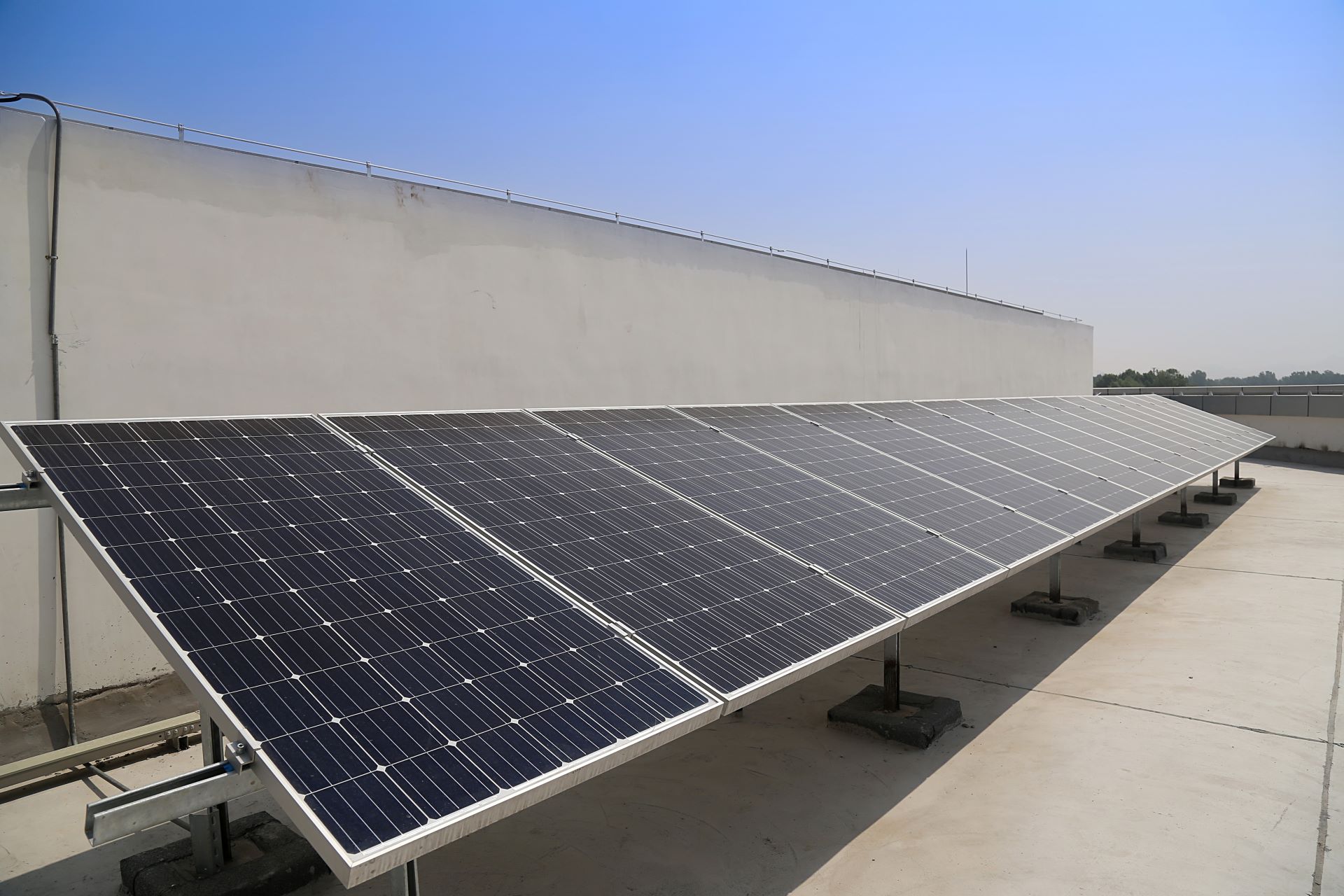
The Importance of Secure Solar Mounting in Coastal Winds
Solar energy installations have become a familiar silhouette across the skyline of Cape Town, where sunlight meets sea breeze and urban rooftops carry quiet power stations. But rooftop solar systems live in a restless environment. Wind pressure, salty air drifting inland from the Atlantic, and occasional storm gusts test the endurance of mounting hardware every season.
The primary defence of a rooftop solar array is not the photovoltaic panel itself but the mechanical backbone holding it to the roof structure. Mounting brackets, bolts, and rails must resist both vertical gravitational load and lateral wind forces that try to pry panels away like stubborn autumn leaves.
Wind dynamics in coastal regions are especially unpredictable. Sudden gust acceleration around tall buildings can create pressure pockets that repeatedly flex mounting structures. Even a well-installed system can gradually loosen if maintenance is ignored.
Property owners often assume solar installations are “fit and forget” assets. Yet rooftop systems behave more like living infrastructure than static fixtures. Small shifts in hardware tension, oxidation on fasteners, or vibration fatigue can slowly reduce safety margins.
In coastal environments, routine inspection is not optional. It is the difference between a resilient energy investment and a structure waiting quietly for the wrong storm.
Understanding Wind Load Pressure on Rooftop Arrays
Wind load is not a simple force but a conversation between air movement, geometry, and structural resistance. When wind flows across solar panels mounted on rooftops in Cape Town, it behaves much like water rushing over submerged stones, creating zones of lift and suction.
Panel orientation influences exposure. Roofs facing open coastal corridors are more vulnerable than those shielded by surrounding buildings or terrain. The famous mountain barrier near the city alters airflow patterns, sometimes accelerating wind currents over ridge edges.
Solar panels act like aerodynamic plates. When wind hits the underside of a panel array, it generates upward suction forces that try to peel the system away from the mounting frame. This is why bolt tension and bracket anchoring are critical.
Engineers design mounting systems with safety margins that account for regional weather extremes. However, safety margins are not immortality cloaks. Metal expands under heat and contracts during cool mornings. Micro-movements accumulate over months.
Salt-laden air also plays a subtle but persistent role. Coastal corrosion is slower than visible rust but more dangerous because it weakens internal metal bonding before symptoms appear.
Regular inspection ensures that the installation continues performing at its original design strength rather than drifting silently toward structural fatigue.
The Role of Mounting Bolts in System Stability
Mounting bolts are the unsung sentinels of rooftop solar safety. While panels receive sunlight and attention, bolts perform their quiet duty inside shaded mechanical crevices, holding the energy system firmly against gravity and wind.
Bolts maintain system stability by preserving clamping pressure between rails, brackets, and roof anchors. If torque levels drop, microscopic movement begins. This movement may not be immediately visible but can gradually enlarge bolt holes or wear protective coatings.
During maintenance inspections, technicians should verify bolt tension using calibrated torque tools rather than relying on hand feel alone. Over-tightening can be as harmful as loosening because excessive compression stresses metal threads and may deform mounting plates.
In the maritime-influenced climate of Cape Town, stainless steel fasteners are typically preferred due to corrosion resistance. Yet even stainless steel is not immune to long-term environmental stress.
Watch carefully for white powdery residue around bolt heads, which may indicate early-stage oxidation or salt crystallisation. Any sign of corrosion should trigger cleaning and possible fastener replacement.
Check bolt torque consistency across the entire array
Replace visibly corroded fasteners immediately
Ensure washers are intact and properly seated
Maintenance is less about dramatic repair work and more about preserving equilibrium inside the mounting network.
Bracket Integrity and Frame Connection Points
Brackets are the skeletal joints of a rooftop solar system, translating panel weight and wind pressure into safe load transfer paths through the roof structure.
Over time, bracket metal can experience fatigue stress from constant micro-vibrations. Wind gusts do not have to be powerful to cause damage; repetitive moderate movement is often more dangerous than rare extreme storms.
Technicians should inspect welding seams, joint overlaps, and bolt-seat surfaces. Small hairline cracks are early warning whispers from the metal structure. If caught early, these can be addressed through reinforcement or component replacement.
Roof surface interface points deserve special attention. Rubber gaskets, waterproof membranes, and isolation pads help prevent structural wear and water ingress.
In coastal districts of Cape Town, moisture intrusion is particularly problematic because trapped humidity accelerates corrosion cycles beneath mounting plates.
Loose brackets may produce subtle symptoms such as rattling sounds during windy afternoons or minor panel misalignment visible only when viewed along the roof plane.
Structural integrity should always be evaluated holistically. One weakened joint can redistribute load stress across neighbouring components, starting a chain reaction of mechanical fatigue.
Corrosion Management in Coastal Air
Salt carried by ocean winds behaves like invisible sandpaper on exposed metal surfaces. Solar mounting structures installed near the Atlantic coastline of Cape Town must therefore adopt corrosion management as a core maintenance philosophy.
Surface cleaning is the first defence. Dust, bird droppings, and salt residue create moisture-retaining layers that accelerate chemical reactions on metal surfaces. Gentle cleaning using non-abrasive cloths and appropriate cleaning solutions helps preserve protective coatings.
Technicians should avoid harsh pressure washing directed at mounting joints. High-pressure water can drive moisture deeper into bolt threads or seal interfaces.
Protective coatings may be reapplied during scheduled maintenance cycles if manufacturer specifications allow. Not all mounting systems are designed for post-installation coating treatment, so compatibility must be verified.
Pay attention to dissimilar metal contact points. When different metals touch, galvanic corrosion can occur if moisture is present. Proper isolation washers help prevent this electrochemical conversation between metals that were never meant to meet.
Roof Structure Interaction and Load Distribution
Solar mounting systems are only as strong as the roof structures supporting them. Whether installed on tiled, corrugated, or flat concrete roofs common in residential areas of Cape Town, load distribution must be verified.
Roof penetrations should be sealed using weather-resistant materials. Water ingress around mounting anchors is one of the most common secondary failures observed in rooftop energy installations.
During inspections, technicians should check for signs of ceiling dampness directly beneath mounting points. Discolouration, peeling paint, or mould formation inside the building may indicate seal degradation.
Wind uplift forces are transmitted through the mounting frame into the roof substrate. If anchor spacing is too wide or structural support is weak, localised stress concentration may develop.
Older buildings in parts of Cape Town may require structural assessment before solar system upgrades are added. Adding more panels without verifying roof capacity is a common maintenance risk.
Seasonal Inspection Scheduling
Solar mounting maintenance should follow seasonal rhythms rather than random intervention. In the climate of Cape Town, wind behaviour and rainfall patterns shift across the year.
Pre-winter inspections are especially valuable because storm systems often intensify during cooler months. Technicians should prioritise:
• Bolt torque verification across all mounting rails • Bracket crack detection using visual and tactile inspection • Surface cleaning to remove salt accumulation • Sealant condition testing around roof penetrations
Post-storm inspections are equally important. After high wind events, even systems that appear visually intact may have experienced internal stress displacement.
Maintenance records should be stored carefully. Tracking torque adjustments, component replacements, and corrosion treatment dates allows predictive maintenance planning.
Property owners sometimes underestimate the cumulative value of documentation. Good records transform maintenance from emergency repair into strategic asset management.
When Professional Inspection Becomes Necessary
Some maintenance tasks are suitable for property owners, but structural evaluation should remain in the hands of qualified technicians familiar with rooftop energy systems.
Professional inspection is recommended if:
Panel frames show persistent vibration during windy conditions
Visible rust appears near load-bearing mounting points
Mounting bolts require repeated tightening during short intervals
Roof sealing compounds begin cracking or peeling
The coastal construction environment of Cape Town rewards preventative care. Waiting until structural symptoms are obvious often means repair costs multiply.
Solar installations represent long-term energy partnerships between technology and architecture. Treating mounting hardware as a living structural element rather than static metal improves system longevity.
Preserving Rooftop Energy Investments
Maintaining solar panel mounts is less about heroic repairs and more about disciplined attention. The wind that sweeps across the rooftops of Cape Town carries stories of ocean distance and mountain height, but it also carries slow mechanical pressure that tests every fastener and frame.
Mounting bolts are small, humble objects, yet they are the grammatical punctuation of structural safety. When they are tight, clean, and corrosion-free, the rooftop system speaks the quiet language of stability.
Solar energy infrastructure is built for decades, not seasons. With regular inspection, proper torque management, and coastal corrosion awareness, rooftop installations can continue harvesting sunlight like patient metal sunflowers turning toward bright South African skies.
In a city where wind is both companion and challenger, maintenance is the invisible shield protecting clean energy dreams from restless air.