Maintenance Strategies for Office Towers in Cape Town: Scheduling Systems and Preventative Planning
Classification
Commercial Maintenance
Timestamp
May 2026
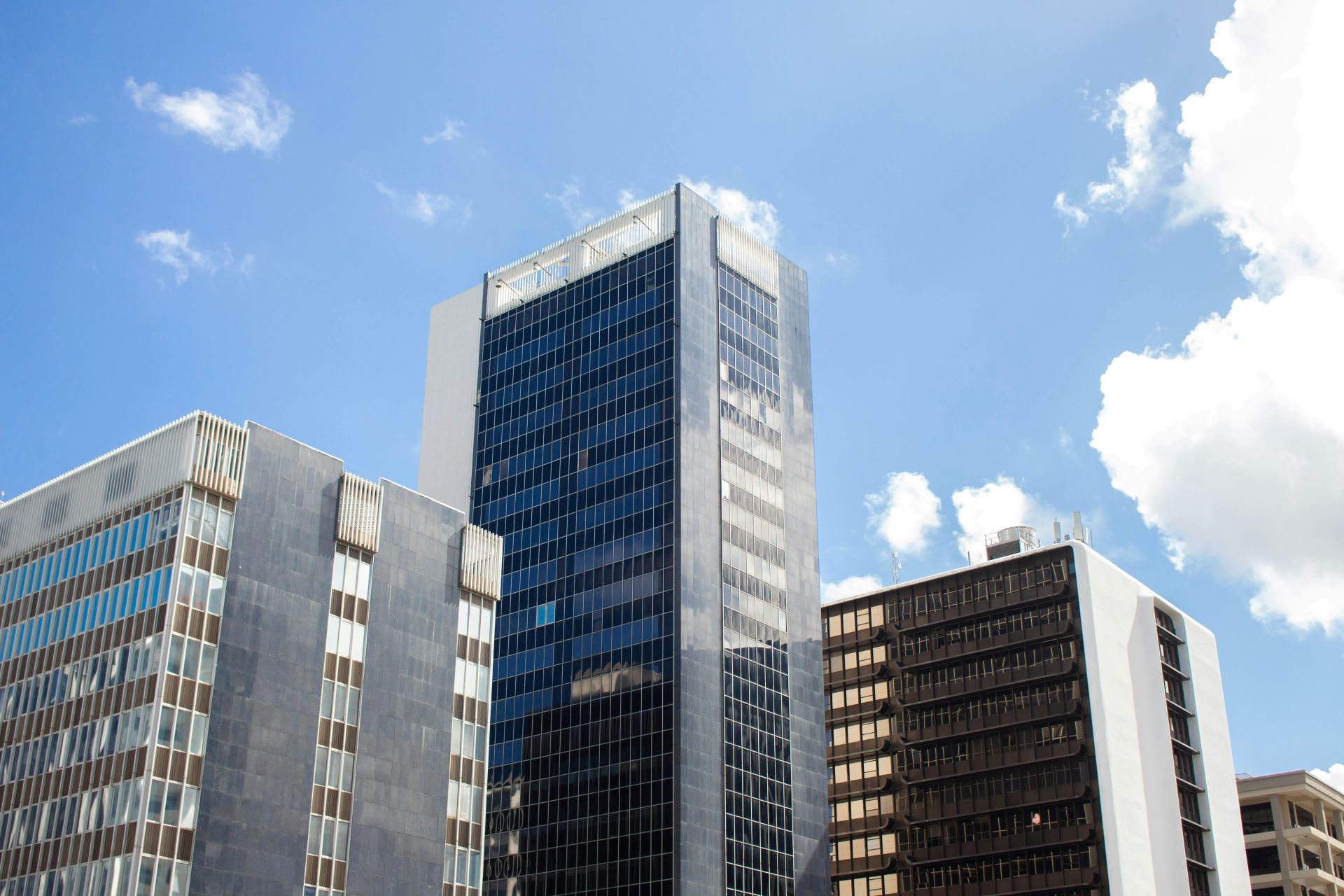
When Buildings Never Sleep
Office towers in Cape Town are not static structures. They are living systems of movement, pressure, heat, electricity, and human expectation. From the first lift that opens before sunrise to the last security patrol after midnight, these buildings are in constant use.
High occupancy demands reliability. Tenants expect seamless lifts, stable power, clean air, and uninterrupted connectivity. Even minor disruptions ripple outward into lost productivity, frustrated tenants, and reputational damage for property managers.
In a city like Cape Town, where environmental conditions shift quickly and infrastructure stress is real, maintenance is not a background function. It is the operational core of the building itself.
Preventative maintenance and structured scheduling systems are what keep these vertical ecosystems functioning smoothly.
The Cape Town Context: Environment Meets Engineering
Maintenance strategies for office towers in Cape Town must account for a unique combination of environmental pressures and urban infrastructure realities.
Coastal air carries salt particles that accelerate corrosion in exposed steel, mechanical systems, and facade fixtures. Buildings closer to the Atlantic seaboard experience this more intensely, but even inland towers are not exempt over time.
Wind is another defining factor. Cape Town’s strong seasonal wind patterns place consistent pressure on glazing systems, curtain walls, rooftop plant equipment, and exterior seals. What appears stable at ground level can behave very differently at 100 metres above it.
Then there is the question of energy stability. Load shedding has reshaped building maintenance planning across South Africa. Backup generators, UPS systems, and emergency lighting circuits are no longer auxiliary systems. They are critical infrastructure that must be tested, maintained, and simulated regularly.
Water management also plays a role. Pressure systems, rooftop tanks, greywater systems, and fire suppression infrastructure all require consistent inspection cycles to avoid unexpected failure under peak occupancy conditions.
The Reality of High Occupancy Pressure
Office towers are not designed for occasional use. They are designed for saturation.
During peak hours, lifts operate at near continuous cycles, HVAC systems run at full load, and plumbing systems experience concentrated demand within narrow time windows.
This creates a phenomenon maintenance teams refer to as cyclical strain. Systems are not simply “on” or “off.” They are constantly ramping, adjusting, and compensating.
Without structured preventative maintenance, this leads to predictable outcomes:
- Accelerated component wear in mechanical systems
- Reduced HVAC efficiency due to clogged filters and strained compressors
- Lift system delays and increased fault rates
- Water pressure inconsistencies on upper floors
- Electrical overload risks during peak usage windows
The challenge is not that systems fail. The challenge is that they fail in patterns that can be predicted and prevented.
Scheduling Systems: The Operational Backbone
At the heart of modern building maintenance lies scheduling. Not the informal kind scribbled into diaries, but structured, software-driven systems that coordinate thousands of maintenance actions across a single building.
Computerised Maintenance Management Systems (CMMS) allow facility managers to map every asset in a building, assign maintenance intervals, and track performance history over time.
In a Cape Town office tower, this might include HVAC servicing every quarter, lift inspections on a monthly cycle, fire system testing weekly, and facade inspections annually.
What makes scheduling powerful is not just timing, but coordination. A well-designed system ensures that maintenance activities do not disrupt tenant operations unnecessarily.
For example, HVAC servicing can be staggered across floors during low occupancy periods, while electrical inspections are aligned with planned downtime or weekends.
The result is a maintenance ecosystem that behaves less like emergency response and more like orchestration.
Preventative Maintenance: Fixing Before Failure
Preventative maintenance is the philosophy that defines modern building management. Instead of waiting for breakdowns, systems are serviced based on predicted wear and performance cycles.
In office towers, this approach is particularly critical because failure rarely remains isolated.
A single chilled water pump malfunction can affect multiple floors. A lift outage can bottleneck movement across the entire building. A fire system fault can trigger compliance violations and operational shutdowns.
Preventative maintenance focuses on identifying early indicators:
- Vibration changes in mechanical equipment
- Temperature fluctuations in HVAC systems
- Pressure inconsistencies in water systems
- Electrical load irregularities in distribution boards
These signals are subtle, but when tracked consistently, they form a predictive map of system health.
Cape Town’s environmental conditions make this even more important. Salt corrosion and wind exposure often create gradual degradation that is invisible until failure occurs.
HVAC Systems: The Breath of the Building
Heating, ventilation, and air conditioning systems are among the most critical components in any office tower.
In high occupancy environments, HVAC systems are constantly balancing air quality, temperature stability, and energy consumption.
In Cape Town, seasonal variation adds another layer of complexity. Hot, dry summers require cooling efficiency, while cooler, damp winters demand humidity control and thermal stability.
Preventative maintenance for HVAC systems typically includes:
- Filter replacement and cleaning cycles
- Chiller inspection and refrigerant checks
- Duct integrity assessments
- Sensor calibration and airflow balancing
Without structured maintenance, HVAC systems become energy inefficient and inconsistent, leading to tenant discomfort and rising operational costs.
A well-maintained system, however, operates quietly in the background, adjusting to occupancy loads like a steady breathing rhythm within the building.
Lift Systems: Vertical Highways Under Pressure
In office towers, lifts are not convenience features. They are critical transport infrastructure.
High occupancy creates intense usage cycles, particularly during morning arrival and end-of-day departure windows. These peak periods place mechanical stress on motors, cables, braking systems, and control software.
Preventative maintenance for lifts includes regular safety inspections, lubrication cycles, sensor calibration, and emergency system testing.
Scheduling is particularly important here because lift downtime must be carefully managed. Taking multiple lifts offline simultaneously is rarely viable in high-rise office environments.
Maintenance teams often stagger servicing schedules and use predictive diagnostics to identify early wear in components before failure occurs.
The goal is simple but non-negotiable: zero unexpected stoppages during peak occupancy.
Electrical Infrastructure: The Invisible Backbone
Electrical systems in office towers carry everything from lighting and security systems to IT infrastructure and HVAC controls.
In Cape Town, the added pressure of load shedding makes electrical maintenance even more critical. Backup generators and battery systems must be tested under simulated load conditions to ensure readiness.
Preventative electrical maintenance typically involves:
- Inspection of distribution boards
- Thermal scanning for hotspots
- Generator load testing
- UPS battery replacement cycles
- Circuit integrity testing
Electrical failures are rarely isolated events. A single fault can cascade into system-wide disruption, affecting tenant operations, security systems, and even water pumping systems.
A structured maintenance schedule ensures that electrical infrastructure is not just functional, but resilient under stress.
Water Systems and Pressure Management
Water systems in office towers are often underestimated until something goes wrong.
These systems include potable water supply, greywater recycling where applicable, fire suppression systems, and pressure pumps that service upper floors.
In tall buildings, gravity alone is not sufficient. Mechanical pumping systems maintain consistent water pressure across all levels.
Preventative maintenance includes pump servicing, tank cleaning, valve inspections, and pressure testing.
In coastal cities like Cape Town, mineral buildup and corrosion can also affect internal pipework over time, reducing efficiency and increasing the risk of leaks.
A failure in water systems is not just an inconvenience. It can affect sanitation, fire safety compliance, and tenant usability in a matter of hours.
Facade Maintenance: The Building’s First Line of Defence
The facade of an office tower is constantly exposed to environmental stress.
Wind pressure, UV exposure, salt corrosion, and temperature fluctuations all contribute to gradual material fatigue.
Curtain wall systems, glazing seals, and external cladding require scheduled inspections to identify early signs of deterioration.
Preventative facade maintenance may include:
- Sealant replacement cycles
- Window glazing inspections
- Anchor point testing
- Water ingress assessments
In Cape Town’s coastal environment, facade maintenance is not cosmetic. It is structural protection.
A compromised facade can lead to water ingress, thermal inefficiency, and long-term structural damage if left unchecked.
The Role of CMMS in Modern Building Management
Computerised Maintenance Management Systems have transformed how office towers are maintained.
Instead of reactive repairs, facility teams now operate within structured digital environments that track assets, schedule tasks, and log maintenance history.
Each system component, from air handling units to fire alarms, becomes a data point in a larger operational ecosystem.
CMMS platforms enable:
- Predictive maintenance modelling
- Asset lifecycle tracking
- Work order automation
- Compliance reporting
- Resource allocation planning
In high occupancy office towers, this level of control is essential. Without it, maintenance becomes fragmented and reactive, increasing downtime and operational risk.
Tenant Coordination and Operational Timing
One of the most complex aspects of maintenance scheduling is tenant coordination.
Office towers in Cape Town often operate with multiple tenants, each with different working hours, operational needs, and sensitivity to disruption.
Maintenance teams must therefore balance technical requirements with human schedules.
Work is often planned during early mornings, late evenings, or weekends to minimise disruption. Communication is critical, ensuring tenants are informed of planned activities well in advance.
In many cases, maintenance becomes a negotiation between technical necessity and operational convenience.
Emergency Preparedness and Response Systems
Even the best preventative maintenance systems cannot eliminate all risk.
Emergency preparedness remains a core requirement in office tower management.
This includes fire system readiness, evacuation lighting, emergency communication systems, and backup power continuity.
Regular drills and system tests ensure that, in the event of failure, building occupants can be guided safely and systems can transition into emergency mode without delay.
Cape Town’s regulatory environment requires strict compliance with safety standards, making this an essential part of maintenance scheduling.
Data-Driven Maintenance and Predictive Insight
Modern maintenance strategies increasingly rely on data.
Sensors embedded in mechanical systems can track temperature, vibration, energy usage, and performance metrics in real time.
Over time, this data reveals patterns that allow maintenance teams to predict failures before they occur.
Instead of waiting for breakdowns, teams can intervene early, replacing components during planned downtime rather than emergency situations.
This shift from reactive to predictive maintenance represents one of the most significant advancements in building management.
Reliability as a Design Outcome
Office towers in Cape Town are complex systems operating under constant pressure. High occupancy, environmental exposure, and infrastructure demands create an environment where reliability is not optional.
It is designed through scheduling, maintained through preventative care, and sustained through disciplined operational planning.
When maintenance is executed correctly, it becomes invisible. Systems function seamlessly, tenants remain productive, and the building operates as a stable vertical city.
Behind that stability is not luck. It is timing, structure, and continuous attention to detail woven into every level of the tower.