Maintaining Heritage Buildings in Cape Town Properly
Classification
TECHNICAL INSIGHT
Timestamp
May 2026
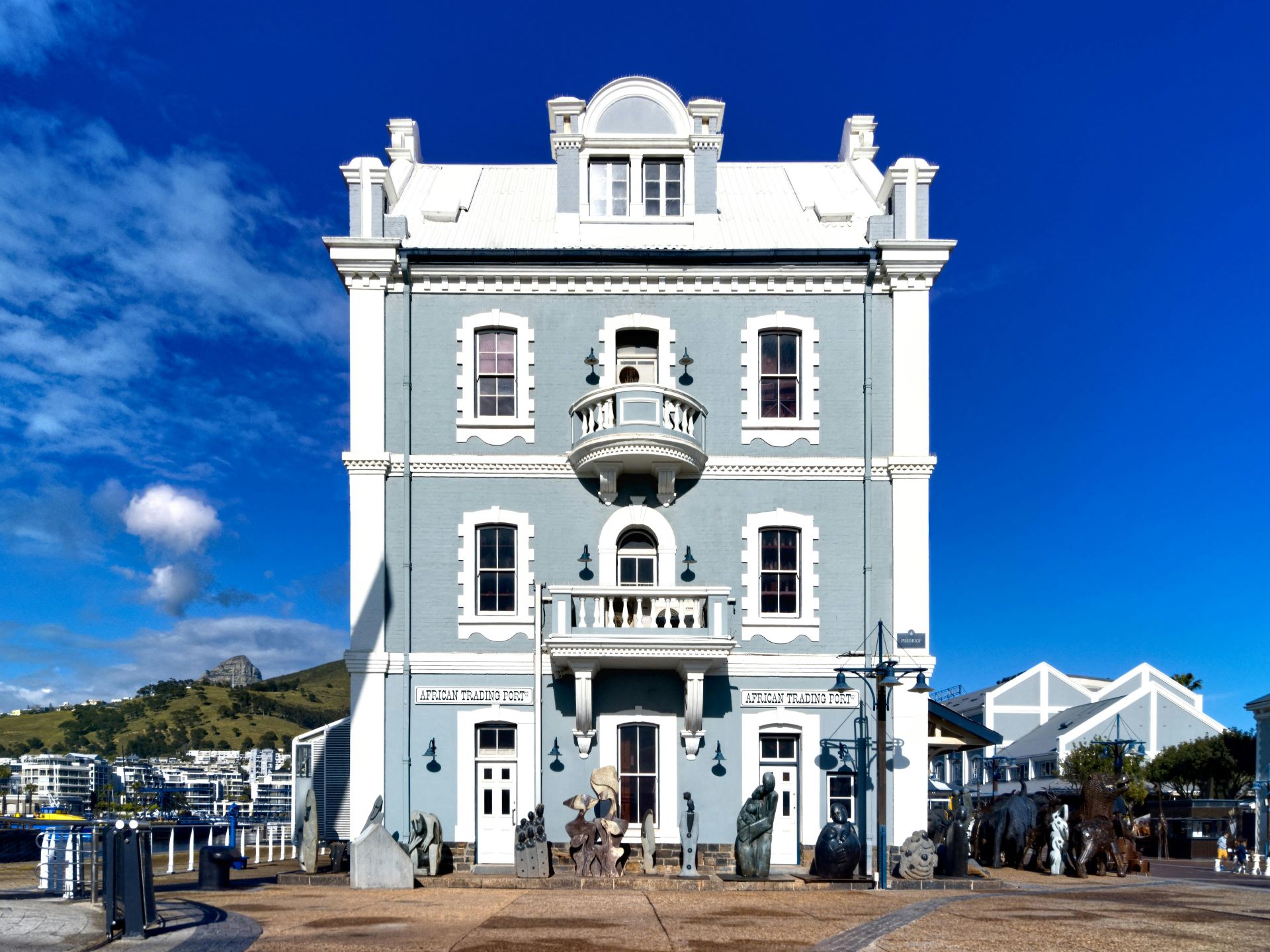
The Living Memory of Cape Town’s Built Heritage
Cape Town’s heritage buildings are not static monuments. They are living, breathing structures that shift subtly with time, climate, and use. From the grand facades of the City Bowl to weathered Victorian homes tucked into leafy suburbs, these buildings carry a physical memory embedded in stone, timber, lime, and hand-mixed mortar.
Maintaining them is never a straightforward construction task. It is closer to interpreting a slow-moving conversation between past and present. Every crack, stain, or warped beam is part of that dialogue, and in Cape Town’s coastal climate, that dialogue can become unpredictable very quickly.
Humidity, salt air, sudden temperature shifts, and decades of layered interventions all contribute to a material reality that modern construction standards rarely anticipate. Old buildings do not behave consistently, even when they appear stable on the surface. Their materials have aged, adapted, and sometimes quietly deteriorated in ways that only become visible when repair work begins.
Why Old Materials Behave Unpredictably
The unpredictability of heritage materials is not a flaw in the building, but a consequence of their age and composition. Many older Cape Town structures were built with lime-based mortars, natural stone, soft-fired bricks, and timber species that respond to moisture and temperature in ways modern materials do not.
Unlike modern cement-based systems, these older materials are porous and flexible. They breathe. They expand and contract with seasonal changes. This means that when modern rigid materials are introduced during repairs, tensions can form inside the structure.
Research into heritage masonry highlights a recurring issue: incompatible repairs often accelerate deterioration instead of preventing it. Modern Portland cement, for example, can trap moisture within older stone or brickwork, leading to internal damage that appears only years later. Once that process begins, it tends to spread invisibly through the fabric of the building rather than remaining localised.
In Cape Town, this is particularly relevant due to coastal humidity and salt exposure. Salt crystals form within porous materials, expanding as they dry and creating micro-fractures. Over time, these fractures compound, and the building begins to shift in subtle but significant ways.
The result is a key challenge for any restoration project: you are never only repairing what you can see. You are also negotiating with what the material remembers.
The Restoration Philosophy: Minimal Interference, Maximum Respect
Successful heritage maintenance in Cape Town tends to follow a principle that is deceptively simple: intervene as little as possible, but as much as necessary.
This approach recognises that every intervention permanently alters the original fabric of the building. Even well-intentioned repairs can become future points of weakness if they do not respect the building’s original material logic.
In practice, this means prioritising conservation over replacement. Original timber is repaired rather than replaced where possible. Stone is stabilised rather than resurfaced. Mortars are matched in composition and breathability rather than simply in appearance.
A well-documented example from Cape Town’s restoration landscape shows how this philosophy plays out in practice. During the restoration of historic civic structures, conservation teams often retain irregular layering, patina, and even certain imperfections because they form part of the building’s historical narrative. The goal is not to erase time, but to stabilise its effects.
This philosophy also introduces a discipline of restraint. Modern construction instinct often leans toward full replacement for efficiency and uniformity. Heritage work demands the opposite mindset. It asks the builder to accept imperfection as structural truth rather than visual error.
When Restoration Meets Modern Building Standards
One of the central tensions in maintaining heritage buildings in Cape Town lies in compliance with modern safety, accessibility, and energy standards.
Older buildings were not designed for lifts, fire escape corridors, insulation standards, or contemporary electrical loads. Introducing these systems without damaging the original structure requires careful integration.
This is where the balance between restoration and modernisation becomes most visible. Engineers and conservation architects often need to insert modern systems in ways that remain reversible or minimally invasive. Steel supports may be hidden within existing walls. Electrical conduits may be routed through non-original cavities. Insulation may be added in roof spaces without altering visible heritage fabric.
However, every modern addition introduces a new layer of material behaviour into the building. Steel expands differently to timber. Synthetic insulation alters moisture movement. Glass replacements change thermal dynamics. These shifts must be carefully calculated, because heritage buildings rarely tolerate aggressive modification.
In Cape Town, regulatory frameworks also play a role. Many buildings over a certain age fall under heritage protection, meaning any significant alteration may require approval from local conservation authorities. This adds another layer of complexity, but also protects the architectural identity of the city.
The Material Compatibility Problem
Perhaps the most technical challenge in heritage maintenance is material compatibility. Matching old materials is not just about visual similarity. It is about ensuring that physical properties align.
Stone, mortar, and brick must behave similarly in terms of porosity, flexibility, and thermal expansion. If they do not, stress builds up at the interface between old and new materials.
For example, replacing a soft lime mortar with a hard cement mortar may seem like an upgrade in durability, but it often results in faster decay of the surrounding original masonry. The modern material becomes too rigid, forcing movement into the older, weaker structure.
This is why heritage restoration in Cape Town often involves custom material formulation. Lime mortars may be recreated using traditional ratios. Replacement stone may need to be sourced or engineered to match both appearance and mechanical behaviour. Even timber repairs require careful selection to ensure similar moisture response characteristics.
The difficulty is that many original materials are no longer widely available or commercially produced. This forces conservation teams to either replicate them through specialised processes or adapt repair strategies to minimise replacement altogether.
Modern Interventions in Historic Structures
Despite the emphasis on preservation, modern interventions are sometimes unavoidable. Structural reinforcement, electrical upgrades, plumbing replacement, and accessibility improvements are often necessary for continued use.
The key is how these interventions are executed.
In well-managed projects, modern systems are integrated in ways that respect the building’s original structure. Instead of removing historic fabric, engineers often work around it. Reinforcements are concealed. New elements are designed to be distinguishable on close inspection but visually unobtrusive from a distance.
Fire safety upgrades are a particularly sensitive area. Modern codes may require additional exits or fire-resistant materials, which must be introduced without compromising heritage aesthetics. This often results in creative architectural solutions that blend contemporary engineering with historical form.
Cape Town’s restoration landscape includes many examples where modern additions coexist with historic cores. In such cases, the building becomes a layered document: one part archival, one part functional upgrade, and one part reinterpretation.
The Hidden Cost of Incompatible Repairs
One of the most underestimated risks in heritage maintenance is poor repair methodology. When incompatible materials are used, the damage is rarely immediate. Instead, it develops slowly over years.
Cracking, moisture retention, and accelerated decay often appear long after the renovation is complete. By the time the issue is visible, the original material may already be significantly compromised.
This creates a financial and structural paradox. Short-term savings in repair costs can lead to long-term increases in maintenance expenditure. In some cases, inappropriate interventions require partial reconstruction of previously “repaired” sections.
Cape Town’s coastal environment intensifies this issue. Salt exposure and humidity amplify material incompatibility, making precision in restoration not just preferable but essential.
Heritage Buildings as Functional Spaces
While heritage buildings carry cultural value, they are also functional spaces that must remain usable. Many in Cape Town now serve as offices, museums, restaurants, or residential units.
This functional demand introduces additional pressures. Electrical loads increase, occupancy patterns change, and internal layouts may need adaptation. Each change must be carefully balanced against conservation principles.
A successful heritage building is therefore not frozen in time. It evolves, but within controlled boundaries. The aim is to maintain its historical identity while allowing it to participate in contemporary urban life.
This is where maintenance becomes ongoing rather than episodic. Heritage buildings require continuous attention, not occasional repair campaigns. Small issues must be addressed early, before they escalate into structural problems.
Climate, Coastal Exposure, and Material Stress
Cape Town’s environmental conditions play a major role in how heritage buildings age. The combination of wind, salt air, rainfall, and sun exposure creates a constant cycle of expansion and contraction in building materials.
Timber elements are particularly vulnerable. Moisture absorption leads to swelling, followed by shrinkage during dry periods. Over time, this movement can loosen joints and weaken structural connections.
Stone and masonry face different challenges. Salt crystallisation and moisture penetration slowly erode internal cohesion, especially where previous repairs have altered natural breathability.
Understanding these environmental forces is essential for any restoration strategy. Without this awareness, even well-executed repairs can fail prematurely.
Balancing Authenticity and Modern Expectations
One of the most difficult decisions in heritage maintenance is determining how far modernisation should go. Too little intervention can render a building unsafe or unusable. Too much can erase its historical identity.
The balance lies in clarity of purpose. If the goal is preservation, then every intervention must justify its impact on original fabric. If the goal is adaptation, then changes must be reversible where possible and respectful of historical structure.
Cape Town’s heritage buildings often sit at this intersection. They are both cultural artefacts and active participants in a modern city. Maintaining them requires an acceptance of dual identity.
The Discipline of Respectful Continuity
Maintaining heritage buildings in Cape Town is not simply a technical exercise. It is a discipline built on observation, restraint, and respect for material behaviour that does not always conform to modern expectations.
Old materials are unpredictable because they are alive with history. They have moved through time in ways that cannot be fully replicated. The role of restoration is not to control them completely, but to guide their continued survival.
The most successful projects are those that understand this balance. They preserve the integrity of the original structure while quietly integrating the needs of the present. In doing so, they ensure that Cape Town’s architectural memory remains not only visible, but usable, enduring, and still evolving.