Lifecycle Stages of Cape Town Buildings Explained
Classification
Commercial Construction
Timestamp
May 2026
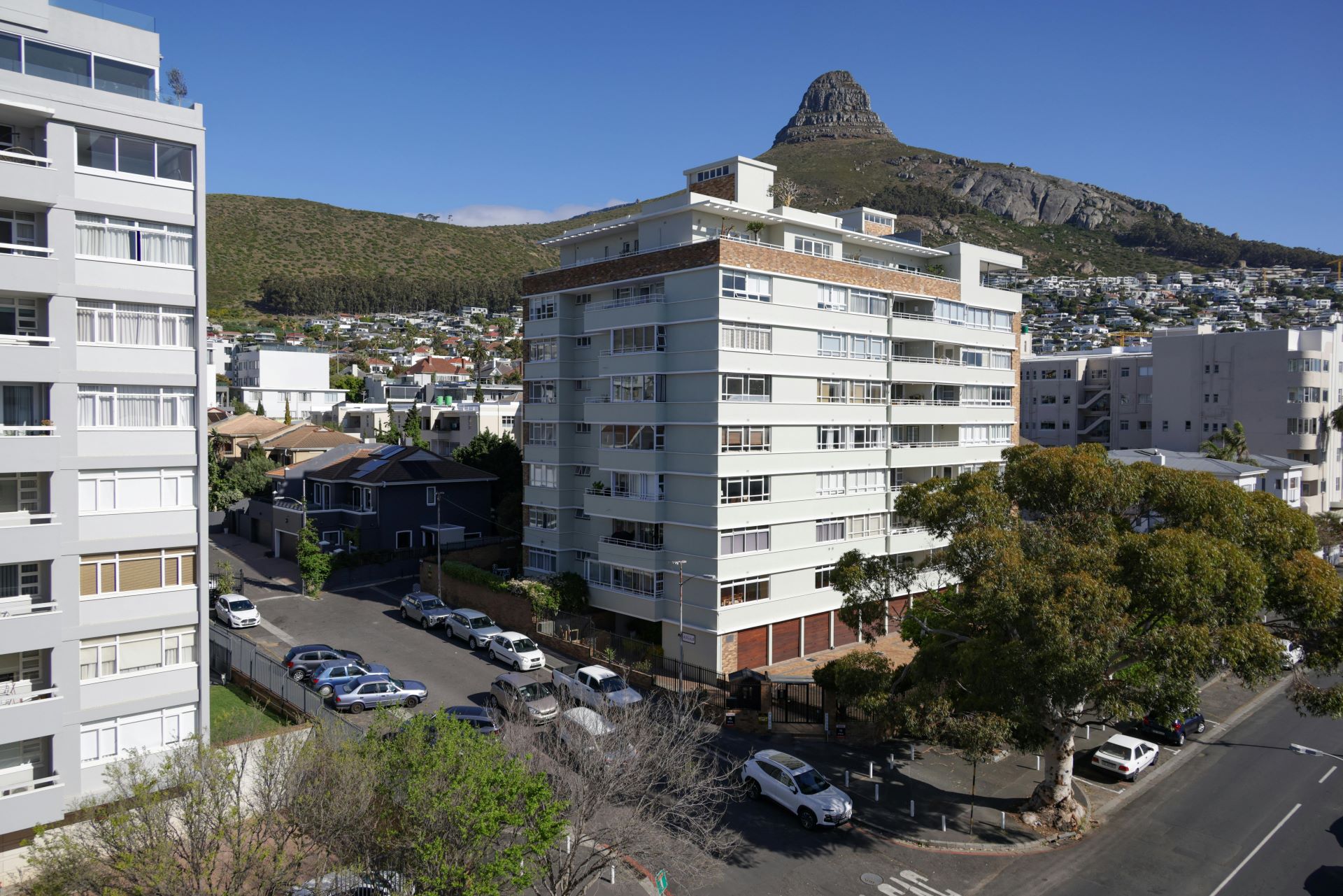
The Lifecycle of a Cape Town Building
Every building in Cape Town tells a slow-moving story written in salt air, coastal winds, shifting soils, and the constant push-and-pull between nature and human design. From the moment concrete cures and steel settles into its intended geometry, the structure begins an inevitable journey through time.
This journey is not random. It follows predictable phases shaped by material fatigue, environmental exposure, usage intensity, and maintenance behaviour. Understanding these phases allows owners, developers, and facility managers to anticipate problems before they appear as visible damage.
In a city like Cape Town, where coastal corrosion, wind-driven rain, and seasonal temperature swings all play their part, the lifecycle of a building becomes even more defined. What begins as a pristine structure eventually becomes a system of layered maintenance needs, renewal cycles, and strategic interventions.
The Birth Phase: Completion and Early Stability
The first stage of a building’s life is its most visually perfect. Fresh paint, tight seals, flawless finishes, and structurally sound components define this phase. In Cape Town developments, this is when buildings transition from contractor control to owner responsibility.
Structurally, the building is at peak stability. Materials are still within their optimal performance range, and most systems function exactly as designed. The environment has not yet had time to impose significant wear.
However, this stage is less about absence of problems and more about the early formation of patterns. Small construction defects, minor settlement cracks, and early moisture ingress points may begin to appear. These are not yet failures, but they are the first signals that the building is beginning to interact with its environment.
Maintenance during this phase is light. Cleaning, inspections, and warranty-driven corrections dominate. The building is essentially in a controlled honeymoon period with its environment.
The Stabilisation Phase: Settling Into Use
As the building moves beyond its initial period of occupancy, it enters a stabilisation phase. This typically spans the early years of use when systems begin to experience real operational load rather than theoretical design conditions.
In Cape Town, this is where coastal exposure starts to matter more noticeably. Salt-laden air begins interacting with exposed metal elements, and wind-driven moisture finds weaknesses in façade detailing. HVAC systems start working harder due to seasonal temperature shifts and humidity fluctuations.
This phase is characterised by equilibrium forming between design intent and real-world performance. Occupants begin to identify minor inefficiencies: doors that no longer align perfectly, paint that weathers faster on wind-facing elevations, or plumbing systems that reveal early pressure inconsistencies.
The building is still structurally sound, but it is no longer untouched. It is now learning its own behavioural profile under Cape Town conditions.
The Early Wear Phase: First Real Maintenance Demands
Eventually, predictable ageing begins to surface more clearly. This is the phase where maintenance stops being occasional and becomes part of operational planning.
Surface finishes begin to degrade faster. Sealants lose elasticity. Waterproofing membranes show early signs of fatigue, especially on flat roofs exposed to UV radiation and seasonal rain cycles. In coastal areas like Sea Point or Muizenberg, corrosion becomes a visible concern on railings, fixings, and exposed steel components.
This phase often surprises property owners because the building still appears relatively new. The structure itself is strong, but the supporting systems begin to demand attention.
Small interventions become more frequent. Repainting, resealing, patch repairs, and localized replacements form the backbone of maintenance activity. Importantly, this is the phase where neglect begins to compound. Small issues that are ignored here will accelerate into expensive repairs later.
The Transitional Phase: From Maintenance to Renewal
As the building ages further, it reaches a point where maintenance alone is no longer sufficient to maintain performance. This is a critical transition in the lifecycle.
Systems that were once repaired now require partial replacement. Waterproofing cycles shorten. Mechanical systems such as pumps, lifts, and ventilation units begin reaching end-of-life thresholds. The building starts to show uneven ageing, where some components remain robust while others deteriorate rapidly.
In Cape Town’s mixed climate conditions, this phase is often accelerated by environmental stress. Coastal corrosion, inland dust exposure, and strong UV radiation all contribute to uneven material fatigue across the building envelope.
At this stage, the building becomes a layered system of histories. Some elements are original, others replaced, and others patched multiple times. Maintenance becomes less about preservation and more about strategic renewal planning.
The Heavy Intervention Phase: Structural Attention Required
Eventually, a building enters a stage where major interventions become unavoidable. This does not necessarily mean structural failure, but rather systemic ageing across multiple building components.
Façades may require refurbishment or partial reconstruction. Roof systems often need full replacement rather than repair. Electrical and plumbing networks may no longer meet modern safety or efficiency standards and require upgrading.
In Cape Town, this phase is often driven by compliance updates as much as physical deterioration. Energy efficiency requirements, fire safety standards, and waterproofing performance expectations evolve over time, forcing older buildings to adapt or upgrade.
This is also where the true cost of deferred maintenance becomes visible. Buildings that were lightly maintained earlier often experience sudden spikes in required investment. Those that were consistently maintained tend to transition more smoothly through this phase.
The Mature Phase: Managed Ageing and Ongoing Renewal
A mature building is not necessarily a deteriorating one. Instead, it is a structure that has entered a continuous cycle of renewal and adaptation.
At this stage, the building no longer has a single “original condition.” Instead, it is a composite of multiple maintenance cycles. Systems have been replaced, upgraded, or retrofitted over time.
In Cape Town’s urban environment, mature buildings are often highly valuable assets when properly managed. Their longevity depends on disciplined maintenance planning, regular inspections, and proactive renewal strategies.
However, this phase demands higher coordination. Different systems age at different rates, meaning facility managers must track multiple lifecycle timelines simultaneously. Roofs, façades, mechanical systems, and interior finishes all operate on different replacement cycles.
The building is still functional, but it now requires structured stewardship rather than reactive maintenance.
The Renewal Cycle Phase: Reinvention or Decline
Every building eventually reaches a crossroads. It either continues through renewal cycles or begins a slow decline toward obsolescence.
Renewal can take many forms. Some buildings undergo full refurbishment, extending their lifespan significantly. Others are partially repurposed, adapted for new uses, or reconfigured to meet modern demands. In some cases, demolition becomes the most practical option, but this is typically the last step after multiple cycles of intervention.
In Cape Town, adaptive reuse has become increasingly relevant, especially in older commercial and industrial zones. Buildings that might otherwise be considered outdated are being reimagined into residential, mixed-use, or creative spaces.
This phase is less about decay and more about decision-making. The question is no longer “how do we maintain this building,” but rather “what should this building become next.”
Environmental Pressure as a Constant Lifecycle Driver
Across all phases, Cape Town’s environment plays a defining role in shaping building lifespan.
Coastal exposure accelerates corrosion in steel and reinforced elements. Wind patterns drive moisture into envelope systems. UV intensity degrades coatings and waterproofing membranes faster than inland cities. Even soil conditions in certain areas influence foundational movement over time.
These environmental pressures mean that lifecycle phases in Cape Town often arrive earlier or require more intensive maintenance than in less exposed regions.
As a result, maintenance planning cannot be generic. It must be location-aware, climate-aware, and material-specific.
Maintenance as a Lifespan Extension Strategy
The most important insight in the lifecycle of any building is that maintenance is not a reaction to ageing. It is a mechanism that actively slows it.
Consistent maintenance reshapes the lifecycle curve. It delays the onset of heavy intervention phases, reduces long-term repair costs, and stabilises performance across systems.
In contrast, neglected maintenance compresses the lifecycle. Buildings move faster from minor wear to major failure, often skipping predictable warning stages.
In Cape Town, where environmental stress is constant, maintenance becomes the primary determinant of whether a building ages gracefully or collapses into reactive repair cycles.
Predictable Ageing, Managed Outcomes
Buildings in Cape Town do not age randomly. They follow structured lifecycle phases shaped by material science, environmental exposure, and human maintenance behaviour.
From initial stability to heavy intervention and eventual renewal, each stage presents both risks and opportunities. The key is not to resist ageing, but to understand it well enough to manage it strategically.
A well-maintained building is not one that avoids ageing. It is one that ages slowly, predictably, and with intention.
And in a city shaped by wind, salt, sun, and growth, that predictability becomes one of the most valuable assets a building can have.