Electrical compliance in South Africa: why a certificate must follow a proper inspection
Classification
Commercial Maintenance
Timestamp
November 2026
Electrical compliance in South Africa: why a certificate must follow a proper inspection
A certificate of compliance is often treated as a document needed when a property changes hands. Recent guidance from South Africa's Department of Employment and Labour is a reminder that the document is part of a wider safety process. It records the outcome of work that must be carried out by a person with the appropriate registration and competence, supported by inspection and testing.
In October 2025, the department reported complaints involving electrical installations found to be non-compliant despite certificates issued during property transfers. Its public notice advised homeowners, businesses and developers to engage competent, legally registered electrical contractors. For owners planning building work or buying an existing property, the practical question is not just whether a certificate exists. It is what it covers, who issued it and whether later alterations have been properly documented.
This issue matters beyond a sale. A refurbished office, an extended house or a workshop fitted with additional equipment can place different demands on an existing installation. Changes to circuits, distribution equipment or the supply arrangement should be assessed by an appropriately registered electrical professional. A certificate is not a promise that no fault can ever develop, and its presence does not remove the need to manage future changes.
What the department's notice means for owners
The department's notice addresses concerns about certificates issued despite underlying defects. It urges owners to appoint registered contractors and stresses that the issuing process must follow proper inspection and testing. It also warns against a registered person issuing a certificate on behalf of an unregistered individual. That distinction is important when several people are involved in a project: a document should not be treated as a signature that can simply be added after work is complete.
The relevant legal framework includes the Electrical Installation Regulations, 2009. These set out requirements relating to electrical contractors, registered persons, installation work and certificates of compliance. The applicable standards and any later changes should be checked for the specific work. Property owners should rely on current professional advice rather than assume that a summary replaces the legislation.
The framework distinguishes the registered electrical contractor undertaking work from the registered person authorised to carry out the relevant verification and issue a certificate. These roles can be connected within one business, but owners should understand who is responsible for each. Ask for the contractor's registration details and the name and registration category of the person who will inspect, test and certify the work where applicable.
Registration alone is not a reason to ignore the scope of a job. The person appointed must be competent and appropriately registered for the installation concerned. An owner can request evidence and, if uncertain, verify it with the Department of Employment and Labour. A genuine professional should be able to explain the planned scope and how compliance documentation will be handled.
A certificate is linked to an installation
A certificate of compliance concerns an electrical installation and is supported by the required test information. It is not a warranty for every appliance plugged into the property, a guarantee of uninterrupted supply or a substitute for maintenance. Nor should a property owner assume that an old document necessarily describes changes made years later.
When taking over a building, ask for the available certificate, associated test report and records of subsequent electrical work. Compare those records with the building as it is now. A distribution board that has clearly been changed, a recently converted room or added fixed equipment may justify further questions. An electrician can determine what documentation is appropriate after inspecting the actual installation and the work history.
The regulations describe requirements for certificates when installations are sold, transferred, altered or extended, with circumstances and exceptions that need to be considered. Do not assume that every change of tenant automatically creates the same requirement as a change of ownership. Equally, do not assume that an alteration needs no documentation simply because the owner remains the same. Ask the registered professional to explain what applies to the particular work and to identify any existing records that should be retained.
Documents can also be incomplete or difficult to match to the work carried out. Check that the property information, issuer and scope are clear, and keep the certificate and relevant supporting records together. If there is uncertainty about authenticity or about a contractor's registration, make enquiries before treating the paperwork as proof that the installation has been adequately assessed.
How changes to a building affect the assessment
An electrical installation is used in the context of a building. The demands in a small office may change when the space becomes a restaurant, a workshop or a medical practice. Similarly, a home extension can add fixed equipment and circuits that were not part of the original installation. These changes do not necessarily mean that the entire electrical system must be replaced, but they do justify looking at the proposed load and the suitability of the existing arrangement.
A useful brief describes what the property is used for now and what will change. Include equipment specifications where available, expected operating hours and whether several high-demand items may operate together. Also explain planned future phases if they are reasonably certain. The contractor can then assess whether further measurement, design input or discussions with the electricity supplier are needed before a final scope is agreed.
Some work may require notification to the supplier or an application for increased capacity. The regulations address installation work involving a new supply or an increase in supply capacity, while the supplier's own process will depend on the connection and area. Do not order equipment on the assumption that the existing supply can accommodate it. Confirm the process with the relevant supplier and the professional responsible for the installation.
A renovation may also affect access to the distribution board, circuit identification and the routing of fixed wiring. These considerations are easier to address before walls are closed or a tenant moves in. Coordination does not require the owner to decide technical details; it requires the owner to make sure the electrical professional receives the architectural plans and knows which other trades will be working nearby.
Inspection and testing are more than a visual glance
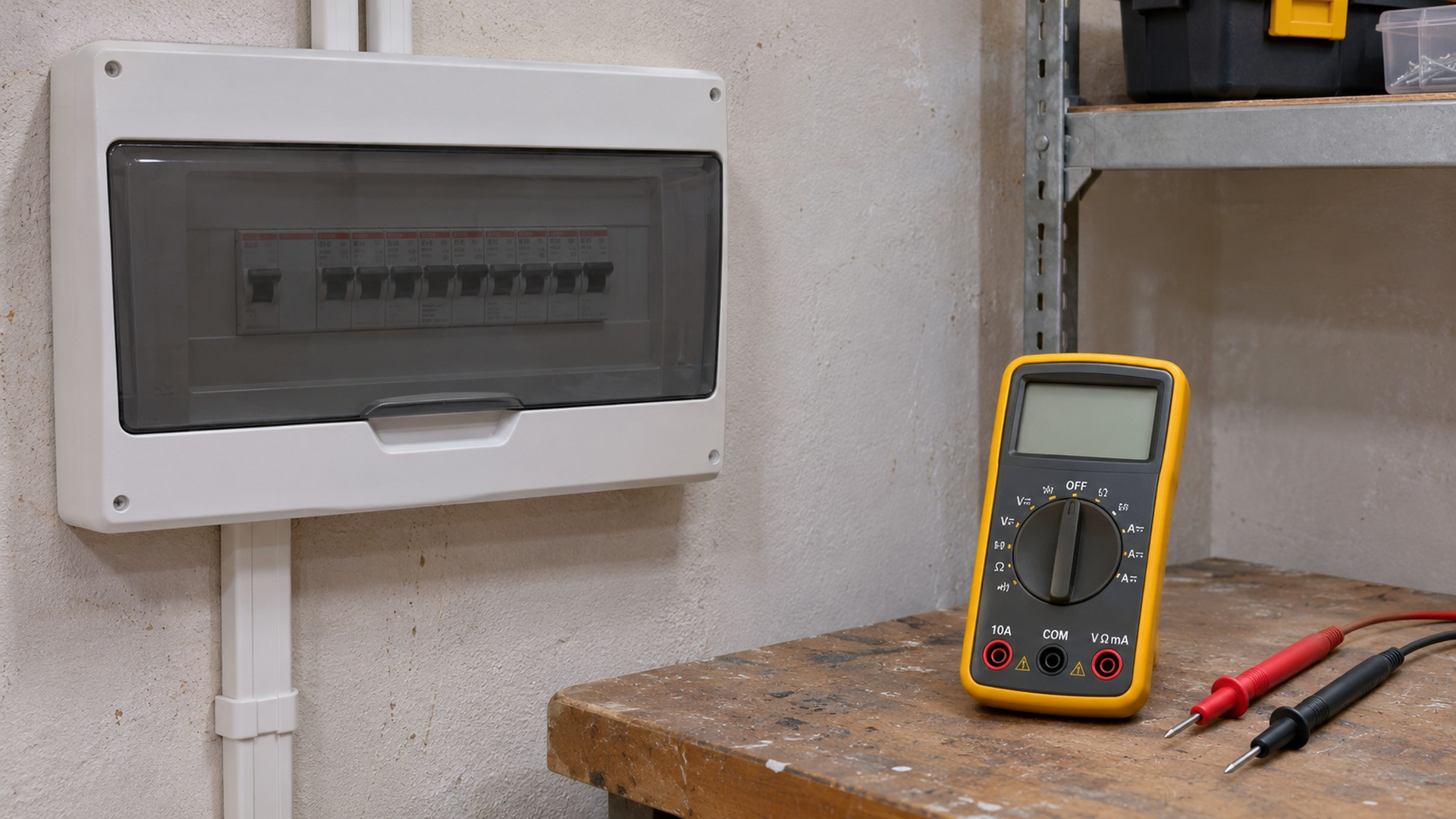
An inspection can identify visible concerns, such as damage, missing identification or arrangements that need closer examination. Testing provides information that cannot be established merely by looking at a board or a socket. The registered person determines the relevant inspection and tests using appropriate equipment and the standards applicable to the installation.
Owners should not open a distribution board or attempt their own electrical tests. An exposed or damaged installation can be dangerous even when it looks inactive. If there is a burning smell, visible sparking or an electrical component affected by water, keep people away and seek urgent help from a qualified professional. Do not touch the affected equipment or try to move wet electrical items.
An initial inspection may lead to remedial work before a certificate can be issued. Ask for the findings in writing, including what must be corrected, what is recommended but separate from the immediate scope, and which findings require further investigation. The professional should explain the basis of the proposed work in terms an owner can understand, while retaining the technical detail needed to carry it out correctly.
If the assessment is part of a property transaction, clarify who is responsible for commissioning the work, paying for defects and supplying the final documents. Those responsibilities may be affected by the applicable law and the sale agreement. Obtain advice relevant to the transaction instead of relying on an informal promise that a certificate will be provided later.
Understand the difference between an inspection and an upgrade
An inspection aims to establish the condition and compliance of the installation against the applicable requirements. An upgrade changes or improves the installation to meet a defined need or rectify a problem. The two may be related, but an owner should be able to see which work is included in each part of a quotation.
For example, an assessment may identify damaged components that must be addressed, while a proposed additional circuit responds to a future operational need. The contractor should explain those items separately. This helps the owner compare quotes and understand whether the price covers investigation, repairs, testing, documentation and any separately requested improvements.
Do not judge an upgrade solely by the number of circuits or the apparent size of a board. Suitability depends on the installation, its intended use and the design choices made by the responsible professional. A more extensive proposal may be justified, but it should be accompanied by an explanation of the problem it solves and the assumptions on which it is based.
Where access to concealed wiring is limited, the quote should make that uncertainty clear. Agree on a process for reporting unexpected defects, providing revised prices and obtaining approval before additional work is carried out. A transparent variation process supports better decisions without pretending that every hidden condition can be known in advance.
Questions to ask before appointing a contractor
Start with the identity and registration of the business and the responsible registered person. Ask whether their registration and competence cover the work, and request confirmation of who will inspect and test the installation. If another contractor is involved, establish how their work will be supervised and documented.
Then ask what the assessment includes. Will the contractor review existing records? Which areas need access? Will interruptions to the supply be required? What happens if defects are found or the installation differs from the available plans? The answers should be reflected in a written scope rather than left as verbal assumptions.
Ask how the final certificate and test report will be supplied where required, and whether any other documents will be provided. Keep copies of invoices, descriptions of completed work, product information for installed equipment and contact details for the contractor. These are helpful records, although they do not replace the certificate and prescribed test report.
Finally, check how the contractor plans to coordinate with occupants. An office may need notice of shutdowns, while a household may need to plan around medical equipment or refrigeration. Raise these needs early so that the work can be scheduled and the necessary precautions considered. A convenient schedule should not be achieved by bypassing inspection or testing.
Why this is a building-management issue
Electrical decisions affect more than the person ordering the work. Tenants, employees, visitors and other trades may use or work around the installation. Clear records and a defined process for alterations help reduce the chance that a future contractor will have to reconstruct the history from memory.
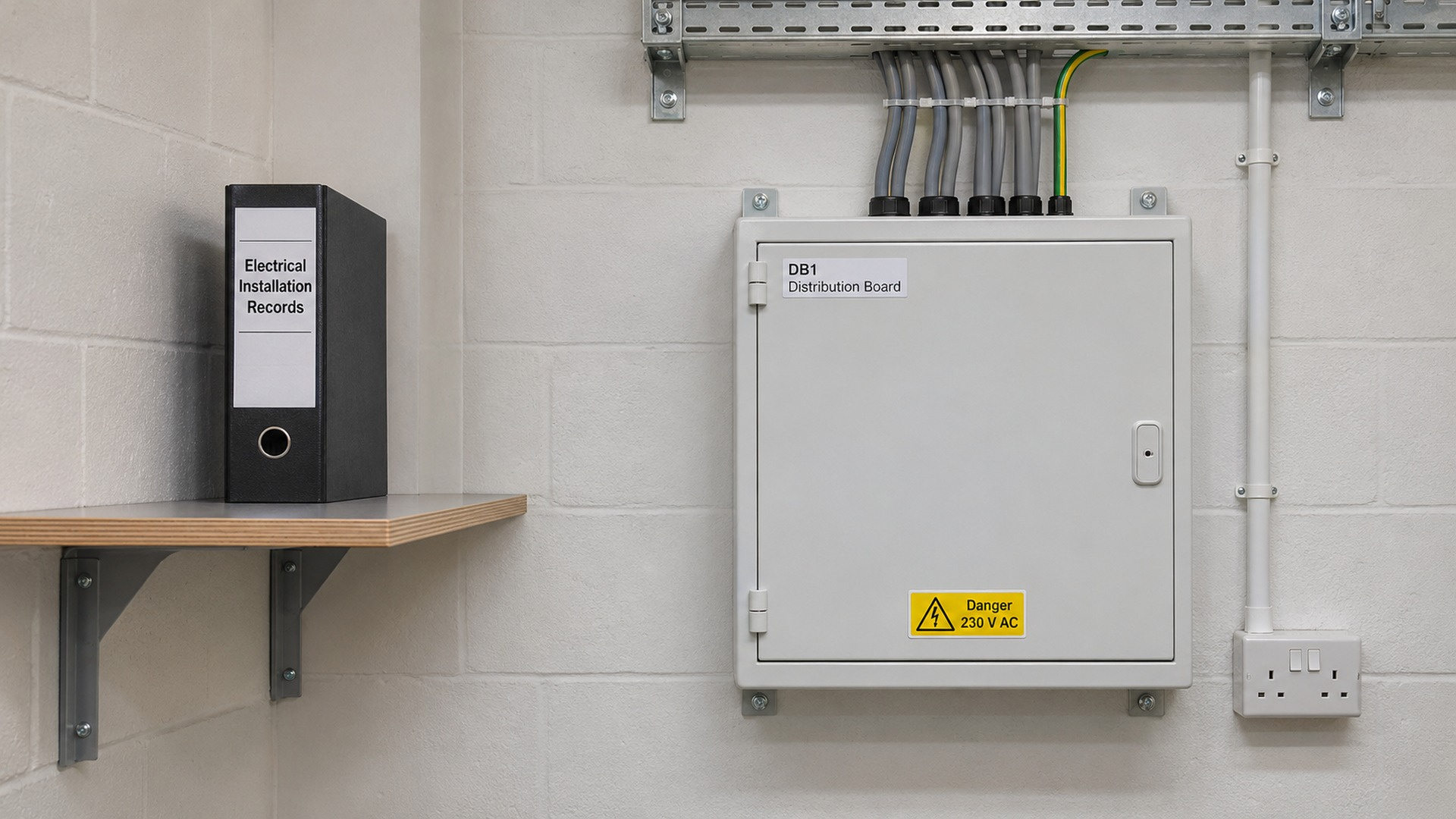
Maintain a central file with the available certificate and test report, distribution-board information, details of material alterations and the contact information of the professionals involved. When a tenant requests changes, establish who will approve the scope, who may carry out the work and what information must be returned to the owner. Lease terms can allocate responsibilities, but they do not make technical or legal requirements disappear.
The department's warning is a useful prompt to review that process. It does not mean every older certificate is invalid or that every building requires the same upgrade. It does mean that owners should take discrepancies seriously and obtain an assessment when they cannot establish whether the paperwork matches the installation.
If you are planning a renovation, investigating an electrical fault or need to discuss an assessment, contact Construction Cape Town with the property details, a description of the work and any existing documentation. Electrical installation work and certification should be handled by appropriately registered professionals for the specific scope.