Corrosion-Resistant Fasteners for Coastal Structures
Classification
Commercial Maintenance
Timestamp
May 2026
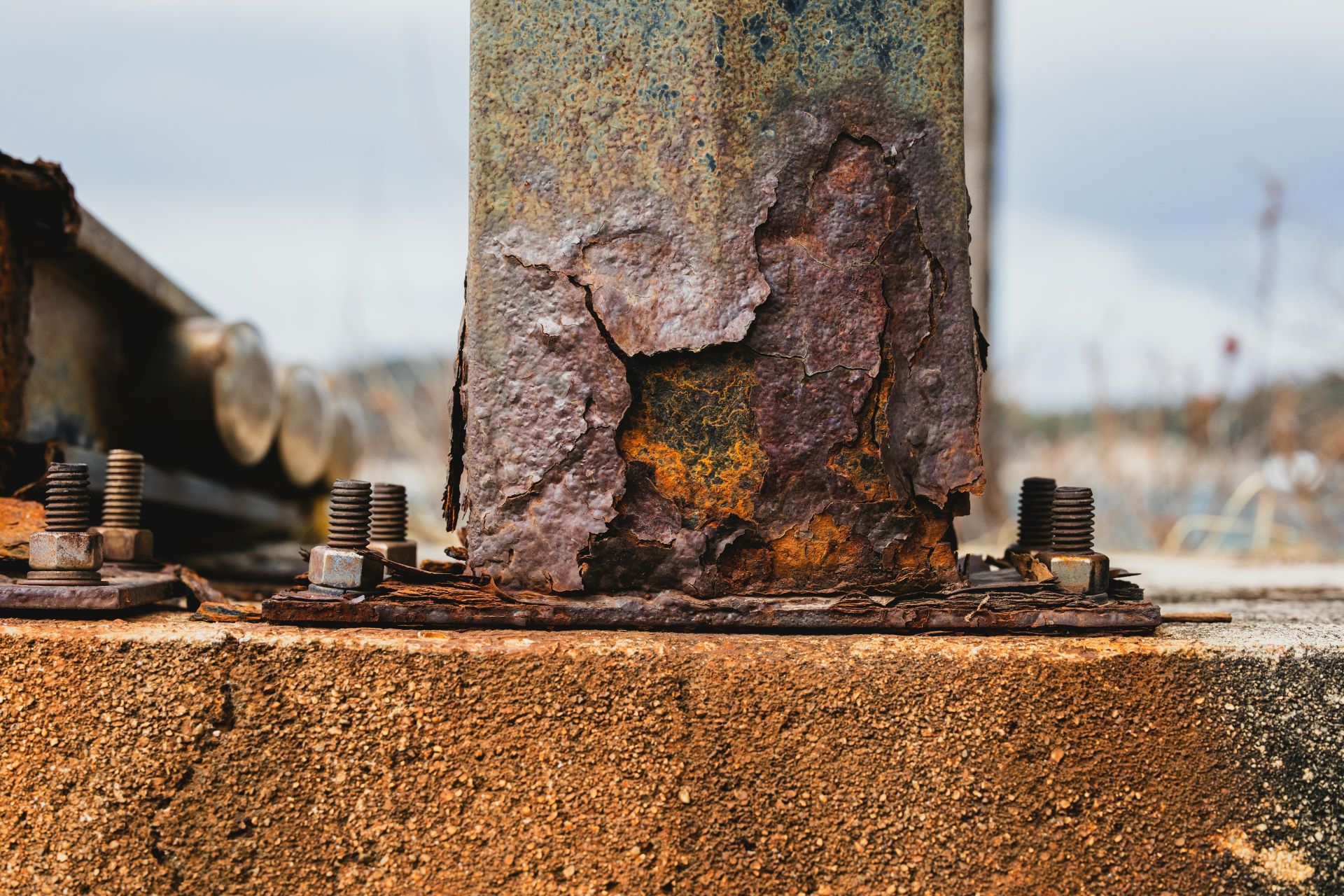
Why Fasteners Matter More Near the Coast
Cape Town’s coastline creates one of the harshest construction environments in South Africa. Salt-laden air, seasonal moisture, strong winds, and ultraviolet exposure combine to accelerate corrosion across almost every exposed metal surface. While much attention is often given to roofing sheets, cladding systems, structural steel, and waterproofing materials, the small components holding these systems together are frequently overlooked.
Fasteners are among the most vulnerable parts of a building envelope. Screws, bolts, anchors, rivets, washers, and threaded connectors are constantly exposed to environmental stress. Once corrosion begins at these connection points, the surrounding structural systems become compromised.
A single corroded fastener can loosen roofing sheets, destabilise façade panels, weaken timber assemblies, and create pathways for water ingress. In coastal construction, this process happens far faster than many property owners expect.
In Cape Town, corrosion resistance is not a luxury specification. It is a structural necessity.
Understanding Coastal Corrosion in Cape Town
Coastal corrosion occurs when airborne salt particles settle on metal surfaces and combine with moisture and oxygen. This creates an electrolyte that accelerates electrochemical reactions within the metal.
The Atlantic Ocean side of Cape Town is particularly aggressive because of persistent winds carrying microscopic salt deposits inland. Buildings located in areas such as Sea Point, Green Point, Camps Bay, Bloubergstrand, Milnerton, and Hout Bay experience elevated corrosion exposure throughout the year.
Even developments situated several kilometres from the shoreline may still fall within moderate or severe corrosion zones due to prevailing wind patterns.
Research and industry guidance in South Africa continue to highlight the impact of salt-rich coastal environments on construction materials and fastening systems.
Why Fasteners Fail Before Other Components
Fasteners often deteriorate earlier than surrounding materials because they experience concentrated stress and exposure.
Several conditions contribute to premature fastener failure in coastal structures:
• Thin protective coatings
• Poor compatibility between metals
• Water retention around fixing points
• Mechanical damage during installation
• Exposure to ultraviolet radiation
• Salt accumulation around joints
• Thermal expansion and contraction
Roofing fasteners are especially vulnerable because they penetrate protective building layers. Once the coating around a screw head or threaded shaft becomes damaged, corrosion can spread rapidly beneath roofing sheets and cladding systems.
Some manufacturers specifically engineer coastal fasteners with enhanced zinc-tin coatings and shank protection to reduce coating damage during installation.
The Hidden Threat of Galvanic Corrosion
One of the most destructive forms of coastal deterioration is galvanic corrosion.
This occurs when two dissimilar metals come into contact in the presence of an electrolyte such as salty moisture. An electrochemical reaction develops between the metals, causing one material to corrode at an accelerated rate.
In coastal Cape Town conditions, galvanic corrosion can escalate quickly.
Common examples include:
• Stainless steel screws installed into aluminium sheeting
• Galvanised bolts connected to copper components
• Mild steel brackets attached to stainless assemblies
• Aluminium cladding fixed with incompatible rivets
The less noble metal sacrifices itself during the reaction process. Over time, this weakens the connection point and compromises structural integrity.
Many coastal construction failures begin not with dramatic structural collapse, but with slow galvanic degradation around fastener locations.
Structural Loosening and Movement
Corroded fasteners do not simply rust in place. They gradually lose mechanical strength.
As corrosion reduces material thickness, the fastener’s clamping force weakens. Wind loads, thermal cycling, and vibration then begin to loosen the connection.
Cape Town’s strong coastal winds place significant pressure on roofing systems and façade assemblies. Once fasteners begin loosening, the movement creates larger penetrations around fixing points.
This leads to:
• Water ingress
• Membrane damage
• Roof uplift
• Cladding instability
• Timber movement
• Increased vibration fatigue
• Expansion of corrosion zones
Over time, maintenance costs escalate rapidly because secondary materials become damaged alongside the failed connector.
Why Standard Fasteners Are a Risk
Standard electroplated fasteners designed for inland conditions often fail prematurely in marine environments.
Many low-cost screws and bolts use thin zinc coatings that degrade quickly once exposed to salt and moisture. After the protective layer deteriorates, the underlying carbon steel corrodes aggressively.
In coastal construction, cheap fasteners often create expensive failures.
The immediate savings during procurement are usually outweighed by:
• Early replacement costs
• Roofing repairs
• Waterproofing failures
• Structural remediation
• Water damage restoration
• Tenant disruption
• Increased maintenance frequency
The connector becomes the weakest point in the assembly.
Stainless Steel Fasteners and Marine Grades
Stainless steel remains one of the most reliable choices for coastal construction applications when properly specified.
Not all stainless steel performs equally near the coast.
Grade 304 stainless steel provides moderate corrosion resistance but may still suffer surface staining and deterioration under severe marine exposure. Grade 316 stainless steel offers superior protection because of its molybdenum content, which improves resistance against chlorides.
Marine-grade 316 stainless steel is commonly recommended for:
• Roofing fasteners
• Balustrade systems
• Decking anchors
• Coastal façades
• Exterior brackets
• Solar mounting systems
• Exposed structural assemblies
However, even stainless steel requires proper installation and maintenance practices to achieve long-term durability.
Protective Coatings and Surface Treatments
Protective coatings remain essential in coastal environments, particularly for carbon steel components.
Several coating systems are commonly used within South African construction:
Hot-Dip Galvanizing
Hot-dip galvanizing creates a thick zinc barrier that protects steel from moisture and oxygen exposure.
The process involves immersing steel into molten zinc, forming a durable metallurgical bond. This coating system is widely used in structural steel, handrails, brackets, and infrastructure applications.
Mechanical Zinc-Tin Coatings
Certain roofing fasteners use specialised zinc-tin mechanical coatings designed specifically for coastal regions.
These coatings improve corrosion resistance while reducing coating damage during installation.
Powder Coating Systems
Powder coating provides an additional protective barrier for exposed metal surfaces. In coastal applications, surface preparation becomes critical. Poor adhesion or inadequate pretreatment can allow corrosion to spread beneath the coating layer.
Zinc Metal Spraying
Thermal zinc spraying offers another protective solution for exposed steel structures. This method is often used where hot-dip galvanizing is impractical or where onsite protection is required.
The Importance of Proper Material Pairing
Preventing galvanic corrosion begins during the design phase.
Construction professionals must carefully evaluate compatibility between all connected materials.
Key considerations include:
• Metal type compatibility
• Environmental exposure classification
• Moisture retention zones
• Drainage design
• Insulation barriers between metals
• Protective washers and gaskets
• Surface coating integrity
In many cases, isolating dissimilar metals with non-conductive materials significantly reduces galvanic activity.
Failure to account for material interaction can shorten the lifespan of otherwise durable components.
Roofing Systems and Fastener Corrosion
Roofing systems in Cape Town experience some of the harshest environmental exposure on a building.
Fasteners securing metal sheeting are subjected to:
• Direct ultraviolet radiation
• Salt accumulation
• Wind-driven rain
• Thermal expansion
• Condensation cycles
• Mechanical vibration
Once corrosion develops around roofing screws, the waterproofing integrity of the roof becomes compromised.
Corrosion beneath roofing sheets is especially dangerous because it often remains hidden until leaks appear internally. Industry guidance continues to emphasise the importance of compatible coatings and proper fastener design in coastal roofing applications.
Timber Construction and Coastal Fasteners
Cape Town’s growing use of timber decking, pergolas, cladding, and outdoor entertainment areas has increased the importance of corrosion-resistant timber fasteners.
Timber retains moisture and may contain treatment chemicals that accelerate metal deterioration.
Using unsuitable fasteners in timber structures can result in:
• Rust bleed staining
• Structural loosening
• Timber splitting
• Connector expansion
• Reduced load capacity
• Joint failure
Stainless steel fasteners are typically preferred for exterior timber structures near the coast because of their long-term resistance to moisture exposure.
Concrete Anchors in Marine Environments
Concrete structures are not immune to fastener-related corrosion.
Anchors embedded into coastal concrete can suffer corrosion from chloride penetration. As steel corrodes inside concrete, expansion pressure develops around the embedded component.
This can lead to:
• Concrete cracking
• Spalling
• Reduced anchor performance
• Structural instability
• Water ingress
• Reinforcement exposure
Marine-grade anchor systems and corrosion-resistant reinforcement protection strategies are therefore essential in coastal developments.
Solar Installations and Corrosion Risks
Cape Town’s growing solar installation market has created new corrosion management challenges.
Solar mounting systems rely heavily on exposed fasteners, brackets, rails, and clamps. These systems operate continuously under severe environmental exposure.
If incompatible metals are used between mounting rails, roof sheeting, and fasteners, galvanic corrosion can develop rapidly.
Corrosion within solar mounting systems may result in:
• Panel instability
• Roof penetration failures
• Electrical grounding issues
• Water ingress
• Accelerated structural deterioration
Marine-grade fastening systems are increasingly becoming standard practice for coastal solar installations.
Maintenance and Inspection Strategies
Even the highest quality fasteners require regular inspection in coastal environments.
Preventative maintenance significantly extends the lifespan of fastening systems and surrounding structures.
Recommended inspection practices include:
• Visual corrosion assessments
• Checking for loose fasteners
• Monitoring coating deterioration
• Inspecting waterproofing around penetrations
• Removing salt accumulation
• Identifying galvanic reaction points
• Replacing compromised connectors early
Coastal structures should generally undergo more frequent inspections than inland buildings because deterioration progresses faster in marine environments.
Signs of Fastener Failure
Property owners and maintenance teams should remain alert for early warning signs.
Indicators of fastener-related corrosion problems include:
• Rust staining around screw heads
• White oxidation on aluminium surfaces
• Loose cladding panels
• Lifting roof sheets
• Water leaks near penetrations
• Cracked sealant around fixings
• Corroded washers
• Surface bubbling beneath coatings
Early intervention prevents minor corrosion from escalating into major structural repairs.
The Cost of Delayed Replacement
Many coastal property owners delay fastener replacement because the components appear small or insignificant.
This often becomes a costly mistake.
A failed connector can affect entire systems surrounding it. Water intrusion through corroded roof fasteners may damage insulation, ceilings, electrical systems, and structural timber.
Likewise, loose façade connections can compromise safety and increase wind loading risks.
Replacing fasteners early is typically far less expensive than repairing widespread secondary damage.
Compliance and Industry Standards
South African construction professionals increasingly rely on recognised corrosion classifications and fastening standards when specifying coastal materials.
Certain fastener systems are manufactured according to recognised international standards for corrosion resistance and mechanical performance.
Specification should always account for:
• Environmental exposure zone
• Structural load requirements
• Material compatibility
• Lifespan expectations
• Maintenance accessibility
• Waterproofing integration
Choosing fasteners based solely on cost rather than environmental suitability often creates long-term liability.
Coastal Architecture and Long-Term Durability
Cape Town’s architecture frequently embraces exposed steel, aluminium façades, rooftop systems, timber decks, and open-air structural designs.
While visually striking, these features increase exposure to marine corrosion.
Long-term durability depends heavily on the quality of connection systems hidden beneath the visible surfaces.
Fasteners may be small components, but they determine the reliability of larger assemblies.
In many coastal buildings, structural deterioration begins quietly at the connection point long before larger materials show obvious failure.
Choosing the Right Supplier and System
Reliable coastal construction depends on selecting fastening systems designed specifically for marine environments.
Suppliers specialising in corrosion-resistant fastening systems often provide:
• Coastal corrosion classifications
• Material compatibility guidance
• Coating specifications
• Structural load data
• Warranty support
• Installation recommendations
Cape Town’s construction sector continues to place greater emphasis on high-performance fastening systems because of increasing awareness around lifecycle maintenance costs and environmental exposure.
Fasteners rarely receive the same attention as roofing systems, structural steel, or façade materials, yet they remain among the most critical components in coastal construction.
In Cape Town’s aggressive marine environment, connector failure can trigger structural loosening, water ingress, galvanic corrosion, and expensive remediation work. The risks extend far beyond cosmetic rust.
Using corrosion-resistant fasteners, compatible materials, and appropriate protective coatings helps preserve structural integrity while reducing long-term maintenance costs.
Whether constructing residential developments, commercial buildings, solar installations, or public infrastructure, coastal durability begins at the connection point.
When the smallest component fails, the entire structure eventually follows.